Permitting is already complicated enough. Afterall, it is more of a sociological and anthropological phenomenon than a technical and engineering one.
These projects already may require multiple permits. Projects that cross busy motorways and railroads, span waterways, and involve both underground and aerial installations. Suddenly, you're juggling not just one permit but a complex web.
This can include right-of-way (ROW), TOWAIR (Temporary Occupancy Within the Airspace Rights) for aerial fiber, railroad crossing, and water crossing approvals and permits. Each comes with its own fees, timelines, and bureaucratic hurdles that can stretch your project schedule and budget if not managed carefully.
Now imagine planning a fiber telecom project that snakes through multiple jurisdictions. Because guess what; that complicated application process mentioned above now changes slightly from city to city to county to whatever other municipal government builders wind homes and businesses.
Navigating this maze of permits is critical to deploying fiber networks efficiently and cost-effectively. Being unafraid of advocating in person to jurisdictions is also important. Checking with local authorities regularly for the latest updates in fees and regulations can be a critical workflow to avoid surprises and keep your fiber build on track.

Telecom Permitting Structure and Costs
Right-of-way permits allow fiber placement along public roads, sidewalks, or utility corridors and often charge fees based on linear footage or aerial space occupied. When fiber is aerial, you may need a TOWAIR permit, which covers temporary occupancy of airspace above public land or roads, potentially adding extra fees or assessments. Special crossings complicate things further. Railroad crossings require coordination with railroad companies and can cost tens of thousands of dollars due to strict safety regulations and construction challenges. Similarly, water crossings often demand environmental assessments and permits from multiple agencies, adding time and cost.
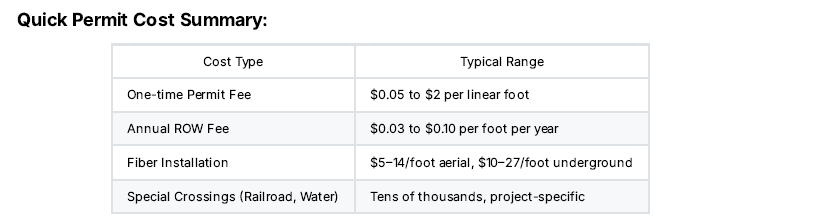
When deploying fiber, understanding permit and ROW costs is essential. For example, in Colorado, the initial one-time fiber communication permit fee is about $0.05 per linear foot of fiber installed. After that, an annual property use surcharge applies $0.10 per foot per year in urban counties (like Denver, Boulder, El Paso) and $0.03 per foot per year in rural counties. And, like I said, other cities have different fee structures.
Billings, Montana charges around $2 per linear foot combining permit and above-ground infrastructure fees, while Madison, Wisconsin's fees range from $2 to $4 per foot depending on conduit size.
While permit fees per foot might seem small, they add up quickly over miles and miles of fiber and can delay projects if approvals take weeks or months. Which they sometimes can. It is good to have a strong advocate to hold the jurisdictions accountable.
Delays increase labor and equipment costs, so planning ahead and understanding local fee structures is key.
For context, fiber installation itself is expensive. Aerial fiber installation costs range from $5 to $14 per foot, and underground installation costs $10 to $27 per foot, depending on terrain and urban density. Average projects can easily be a few hundred miles.
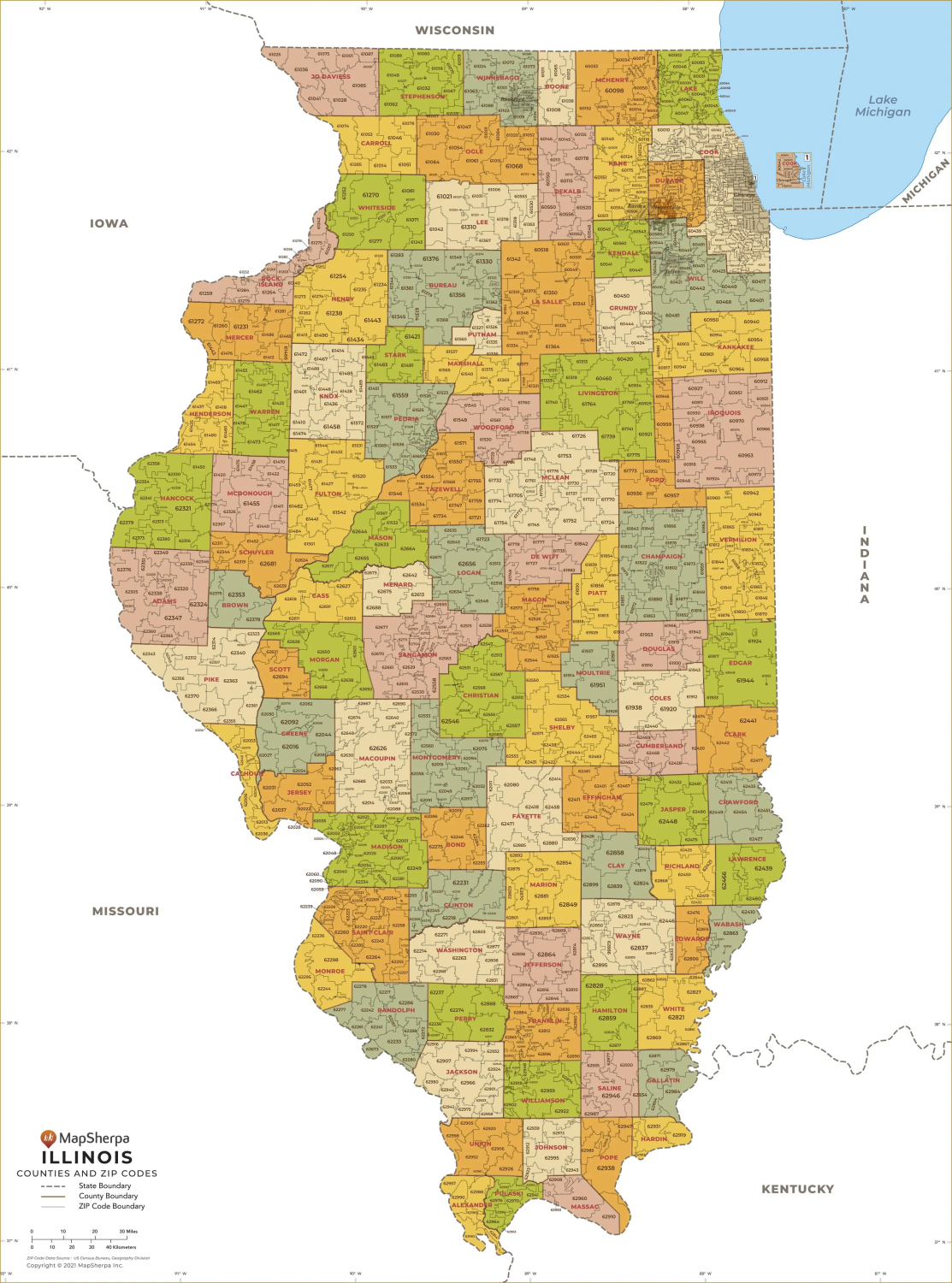
Just take a look at this map of Illinois for example...
Each county presents a new application process. But then each zip code can be yet another municipality or city and yet another completely different application and fee structure compounded onto a 300 mile long project! Now recap the permitting fees...

So What Can Companies Do?
Subject Matter Experts
Not to toot my own horn or anything, but why wouldn't it be first on the list! A good permitting crew will always know what to do. But a great one will always know what to do next. When normal strategies fail us, what else can be done? What new tools and services lie just around the corner with AI?
SMEs will always know the best workflow even if that changes. But showing up to city hall in a full suit and not leaving until you have your permit is a timeless strategy when many others fail. Believe it or not, this is still valid for over a century or more.
Software Tools
These tools are becoming more and more of a requirement. Even in industries with less complicated permitting, managing a database and integrating departments is paramount. Salesforce, HubSpot, and NetSuite Oracle offer great solutions for tracking permits and integrating them to the rest of your team. Your permitting department shouldn't be bogged down with "hey you got this one yet?" or "can I get an update on..." Team members should be able to quickly find an updated permit status attached to the project.
Tools like Salesforce go a step further by allowing you to attach required permits to a given AHJ. This means that as soon as a project is logged into that AHJ by sales or whomever, the permits can auto trigger and become a dedicated requirement seen not only by the permitting department.
Automation
Even pre AI, the exact workflow just mentioned above should display an automated template, prefilled with customer and project info. Permitting SMEs today are capable of automating requirements and managing templates behind the scenes so they can have prefilled documents already available when the submit request comes through. Tools like Salesforce and HubSpot make this incredibly easy. If your company can budget it, they are more than worth it especially in terms of scale.
Summary
Companies can enhance permitting by relying on knowledgeable experts and using software like Salesforce and even AI agents to track and automate permitting tasks. These tools streamline workflows, improve communication, and reduce manual tasks, making the process more efficient and scalable.
In short, even in fiber telecom, permits might seem like just paperwork, but they are a vital piece of the puzzle. Managing them well saves money, time, and headaches. And the companies helping to get high-speed connectivity to communities faster seem to already have a lot on their plate just building the darn thing!