

"The species isn't stuck because the math doesn't work. It's stuck because most people have never heard of any of this."
Introduction
Historical Apoplexy is a term I coined to describe the stroke-like loss of civilizational memory. Not conspiracy. Not suppression by shadowy actors. Structural forgetting - the kind that happens when systems outlive their purpose and nobody remembers why they were built.
A stroke victim doesn't choose to forget how to speak. The architecture that carried the knowledge is damaged. The knowledge itself may still exist somewhere in the tissue, but the pathways are severed. The patient cannot access what they once knew. They may not even know they've lost it.
That is the condition of the species.
We have been here before. We have solved the problems we think are unsolvable or we think require high technology. We have calculated the math we think hasn't been done. We have built the systems we think don't exist yet. And then we forgot. Not once. Repeatedly.
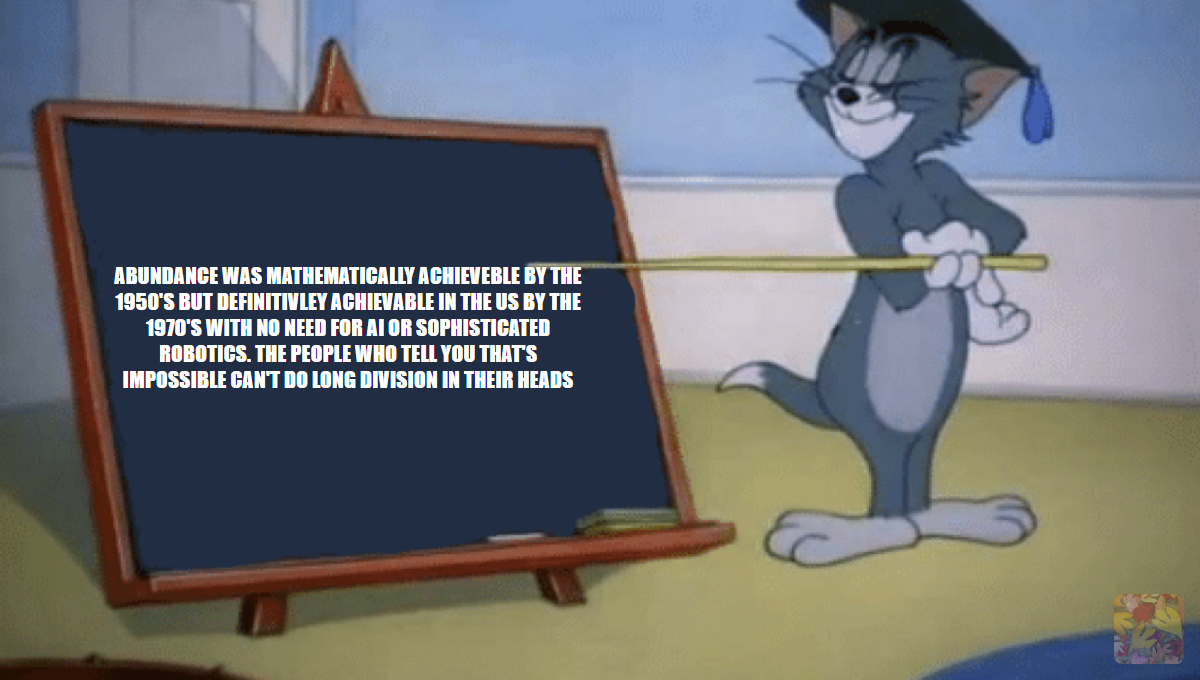
The math of abundance was done almost a century ago:
Albrecht Penck, University of Berlin, 1925: calculated that Earth could sustain 8 billion people. World population at the time was 2 billion. A 4x margin. With 1920s technology.
Nazi Germany - the most morally condemned regime in modern history - achieved 83% food self-sufficiency by 1939. Grains, potatoes, meat, sugar. They had the world's second largest industrial base. They understood the math. Hermann Göring said it plainly: "Guns will make us powerful; butter will only make us fat." They had the butter. They chose the guns.
The war destroyed the capacity. The "free world" rebuilt it. The "free world" also chose scarcity.
Joel Cohen at Rockefeller University compiled 65 historical estimates of Earth's carrying capacity. The median upper bound: 12 billion people. The range extended to 300 billion. And that's not even remotely crazy. Scientists have known for a century that Earth can support far more than its current population. Average people choose not to act like it.
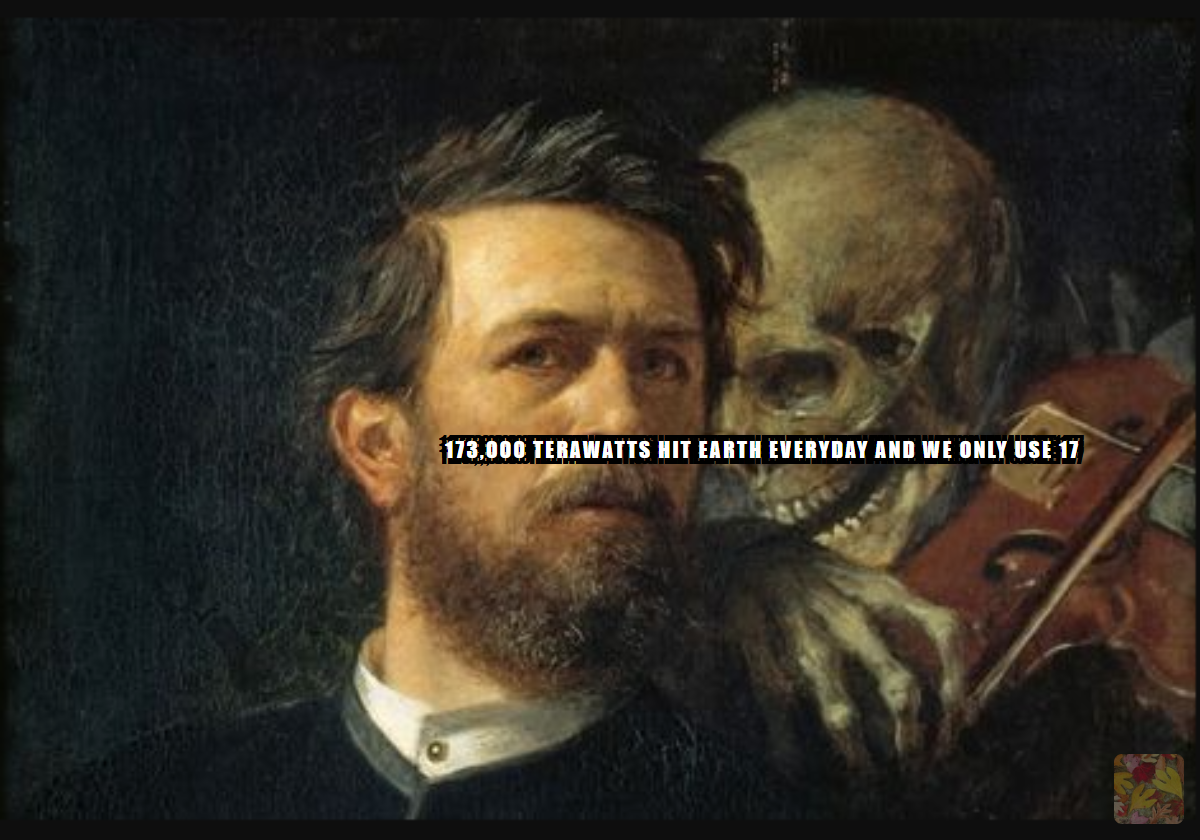
Solar energy hitting Earth continuously: 173,000 terawatts. Total human energy consumption: 17 terawatts. That is a 10,000 to 1 ratio. Every day. This is 1960's era tech that is being hijacked.
Certain people want you to think they invented this. This article and my 5 papers delve unequivocally deep into the entire history of The Arc - Historical consciousness. What if you could understand human history all at once? The easy way out: engage an AI with copy pasta from my article. But Ed Hirsch's work proves there is no substitute for committing knowledge to memory and their never will be.
The Moon holds a million metric tons of Helium-3 - enough fusion fuel for 2,000 years. Jupiter holds 45 quintillion tons - enough for 45 quadrillion years. The Sun burns out in 5 billion. Jupiter's fuel supply outlasts the solar system by a factor of 9 million. Saturn may as well have just as much and is far easier to work with. Neptune is the same and even easier.
Thorium is 3-4x more abundant than uranium. It cannot produce weapons-grade material. That is why it was deprioritized. Not because it doesn't work. Because it doesn't kill.
The food capacity was proven. The energy capacity was proven. The industrial capacity was proven. None of this is theoretical. It is historical record.
And almost nobody knows any of it.
That is Historical Apoplexy. Not the absence of solutions. The forgetting that solutions were already found.
This article traces the full arc - from a 4,400-year-old fishing settlement in Tibet to the American timeline that proves Carroll Quigley's romantic "Western exception" is not occurring. To the fact that modern self-replicating systems can create resources abound even if humans disappeared from the earth. Every claim is sourced. Every citation is lit review.
Not much of it is debatable.
I. Mabu Co: The Answer That Already Exists
In September 2024, Nature Ecology & Evolution published research on the Mabu Co archaeological site in Tibet that should have ended a conversation that somehow continues.
The site:
- Location: 4,446 metres above sea level (14,587 feet)
- Date: 4,400-4,000 years ago
- Finding: World's highest elevation sedentary lifestyle
At an altitude where most humans cannot function without acclimatization, Indigenous Tibetan Plateau populations established permanent settlements. They achieved what current discourse frames as futuristic: sedentary abundance without industrial technology, without factories, without AI.
They did it 4,400 years ago using nothing more sophisticated than fishing hooks and environmental knowledge:
- Lake-centred fishing (primary food source)
- Mammal and bird hunting (supplementary)
- Small-scale trade for millet and rice crops
The question "Will AI finally make abundance possible?" is itself evidence of the apoplexy. The answer has existed for millennia.
The Mabu Co inhabitants didn't need to solve abundance. They needed to not forget that it was already solved.
We forgot.
II. Historical Apoplexy: The Stroke We Can't Name
Historical Apoplexy is the stroke-like loss of civilizational memory - the severance from the Great Conversation, the state of being manipulated by systems one cannot perceive or name.
It is not a conspiracy. The forgetting is structural, not orchestrated. Systems produce outcomes nobody chose, and then nobody can name what happened because there was no actor to point to.
The symptoms are recognizable:
- Performing instead of living
- Optimizing metrics that don't matter
- Feeling trapped by commitments you didn't consciously choose
- Inability to name what's wrong
- Believing you are making free choices when you are responding to design
- Cynicism masking a desire for meaning
- Exhaustion without accomplishment
These feelings are correct. You are not broken. You are responding accurately to a broken environment. The problem is that you lack the language and frameworks to understand what is happening to you - and that lack is not accidental. It is maintained.
The 600-Year Diagnosis
The pattern of civilizational rise and fall has been mapped for six centuries:
Ibn Khaldun, Muqaddimah (1377) Cyclical theory. Group solidarity (asabiyyah) builds empires. Luxury and corruption dissolve them. Repeat. Six hundred years before the West rediscovered it.
Oswald Spengler, The Decline of the West (1918) Civilizations are organisms. They bloom, ossify, and die. The "world-city" as symptom of late-stage civilization.
Arnold Toynbee, A Study of History (1934) Challenge-and-response. Civilizations grow when creative minorities successfully respond to crises. They stagnate when responses become rigid or fail.
Joseph Tainter, The Collapse of Complex Societies (1988) Complexity has diminishing returns. Bureaucratic, military, and infrastructural complexity eventually costs more than it yields. Collapse is a rational (if catastrophic) outcome.
Peter Turchin, Historical Dynamics (2003), Ages of Discord (2016), End Times (2023) Cliodynamics. Quantitative modeling of civilizational cycles. Demographics, elite overproduction, internal conflict - mathematical patterns that echo both Khaldun's group dynamics and Toynbee's crisis responses.
That's 600 years of people explaining the same pattern.
Then a different group started asking: what if we just don't collapse?

III. The Math of Abundance: Calculated and Ignored
The mathematics of abundance was calculated almost a century ago. The capacity for universal provision was known, documented, and deliberately not pursued. Scarcity is a policy choice, not a material constraint.
Energy: The Abundance That Was Always There
Alessandro Volta (1800) Invented the voltaic pile - first electrical battery providing continuous current. The beginning of controllable electricity.
Nikola Tesla (1856-1943)
- Alternating Current (AC) power system - now the global standard
- Tesla coil (1894) - high voltage resonant transformer
- Wardenclyffe Tower (1901-1917) - wireless power transmission
THE WARDENCLYFFE STORY: Tesla sold J.P. Morgan on wireless messaging to Europe. The real vision was wireless electricity transmission - power without wires, free at point of use. When Morgan understood Tesla meant to give away power rather than meter it, funding stopped. The tower was demolished in 1917 to settle Tesla's debts.
The technology was not disproven. It was defunded.
Edward Leedskalnin (1887-1951) Latvian immigrant, self-taught engineer. Single-handedly built Coral Castle, Florida (1923-1951). "Magnetic Current" (1945). "Perpetual motion is not a machine but magnetism." Wrote his books at 10 cents each so working people could afford them. Ignored by the physics establishment.
SOLAR ENERGY: Energy hitting Earth continuously: 173,000 terawatts. World total energy consumption: ~17 terawatts. Ratio: 10,000 to 1.
The question was never whether the energy existed. The question was who controls it.
THORIUM: 3-4x more abundant than uranium. Cannot produce weapons-grade material - which is why it was deprioritized. Less radioactive waste, higher energy density.
Thorium was not chosen because it does not make bombs.
HELIUM-3 - THE SOLAR SYSTEM IS A FUEL DEPOT:
EARTH He3: 15 tons = 11 days of world energy. MOON He3: 1M tons = 770-2,000 years. JUPITER He3: 45 quintillion tons = 45 quadrillion years. SOLAR SYSTEM TOTAL: outlasts the Sun.
The fuel exists. The technology pathway is known. The bottleneck is not physics or resources. The bottleneck is that no one can meter it.

The Calculation Was Done
Albrecht Penck (1925) German geographer, University of Berlin. Calculated Earth could sustain 8 billion people. World population at the time: ~2 billion (4x margin). Proved abundance was mathematically achievable with 1920s technology.
Nazi Germany Food Self-Sufficiency:
- 1936: 80% self-sufficient in basic crops
- 1939: 83% self-sufficient (grains, potatoes, meat, sugar)
Abundance was not theoretical. It was being achieved before the war.
Hermann Göring - "Guns Before Butter" (1936): "Guns will make us powerful; butter will only make us fat."
Explicit acknowledgment that they HAD the capacity for abundance ("butter") but CHOSE to direct it toward war ("guns"). The decision was conscious.
The knowledge was there. The capacity was there. The choice was made - twice. The Nazis chose war. The "free world" rebuilt the capacity. The "free world" also chose scarcity.
This is Historical Apoplexy in its purest form: the forgetting that abundance was already calculated, already achievable, and deliberately not pursued.
Systems, Engineering, and Megastructures
Buckminster Fuller, Operating Manual for Spaceship Earth (1969) Ephemeralization: doing more with less.
Donella Meadows, Thinking in Systems (2008) Leverage points: small structural interventions can cascade through complex systems.
Stafford Beer, Designing Freedom (1974) Cybernetic governance. Feedback-rich systems that allow societies to remain adaptive at scale.
John von Neumann, Theory of Self-Reproducing Automata (1966) Self-replicating machines. The mathematical proof that machines can build copies of themselves.
Olaf Stapledon, Star Maker (1937) Imagined megastructures - stellar-scale engineering. Dyson acknowledged Stapledon as his source.
Freeman Dyson, "Search for Artificial Stellar Sources" (1960) The Dyson sphere concept. Turned science fiction into a search protocol.
Larry Niven, Ringworld (1970) Engineering the Stapledon/Dyson vision into a specific structure.
James Powell & George Maise, StarTram (2001) Maglev launch system to orbit at $30/kg payload cost, 100,000 tons per year capacity. Not science fiction - engineering proposal with cost analysis.
Robert Zubrin, Entering Space (1999) Gas giant He3 harvesting. Practical roadmap from Earth to Type II civilization.
Jacque Fresco, Designing the Future (2007) Resource-based economy. Cities designed for humans not cars. Physical demonstration sites in Venus, Florida.
The hardware exists. The energy path exists. The governance models exist. The engineering is specifiable.
The missing piece was never technology.

IV. The Hidden Curriculum: Mothering at Scale
Philip W. Jackson coined the term "hidden curriculum" in Life in Classrooms (1968). Observing Chicago public school classrooms, he identified three forces that shaped children independently of the formal lesson plan:
- CROWDS - Limited resources force sharing, turn-taking, and delay
- EVALUATION - Persistent judgment trains self-regulation
- POWER ASYMMETRY - The teacher as authority figure shapes institutional navigation
Jackson's observation was descriptive, not accusatory. He was naming what happens when you put thirty children in a room with one adult. The socialization is a byproduct of logistics, not a deliberate program.
The Genuine Goods
Sharing is not resource management dressed as pedagogy. It is teaching a child that other people exist and matter.
Waiting is not crowd control rationalized as virtue. It is teaching a child that their impulse is not the center of the universe.
Conflict resolution is not compliance training. It is teaching a child that disagreement does not require destruction.
Handholding is not coddling. It is teaching a child that we move together or we do not move at all.
These are genuinely good things to teach human beings. A mother teaches them to her child. A teacher teaches them to thirty children at once. The mechanism is the same. The intent is the same. Ensure everybody gets through this together.
The hidden curriculum is not hidden because it is sinister. It is hidden because the skills are taught through experience rather than lecture - and that is actually the correct pedagogy for social and emotional development.
The Targeting Error
In 1976, Samuel Bowles and Herbert Gintis published Schooling in Capitalist America. Their central thesis: the education system reproduces class structure through correspondence between school hierarchy and workplace hierarchy.
They were not wrong about the observation. Working-class schools do emphasize different skills than elite schools. The outcomes do correlate with class origin more than with individual merit.
The error was the verb: "reproduces."
By claiming that schools reproduce class structure, Bowles and Gintis assigned the education system a causal role it does not hold. They treated correlation as mechanism. They saw stratification expressed through schools and concluded schools were the engine of stratification.
This is like observing that thermometers always show higher readings in summer and concluding that thermometers cause heat.
Schools exist inside a stratified society. They reflect that stratification the way every institution reflects it - the way housing reflects it, the way healthcare reflects it, the way employment reflects it. The stratification runs through everything. Education is one expression, not the origin.
Pointing at one institution and saying "that is where the reproduction happens" is like pointing at one cup of water in the ocean and saying "that is where the salt is."

The Evidence That Hierarchy Kills
Michael Marmot / The Whitehall Studies (1967-present) 10,308 British civil servants - all employed, all with healthcare, none in absolute poverty. Findings:
- Lowest grade civil servants had 3x the mortality of top grade
- Standard risk factors explained <40% of gradient
- The "executive stress" myth demolished: more responsibility = LOWER disease
- Low control at work was the biggest factor
- Gradient applied to heart disease, cancer, lung disease, depression, suicide
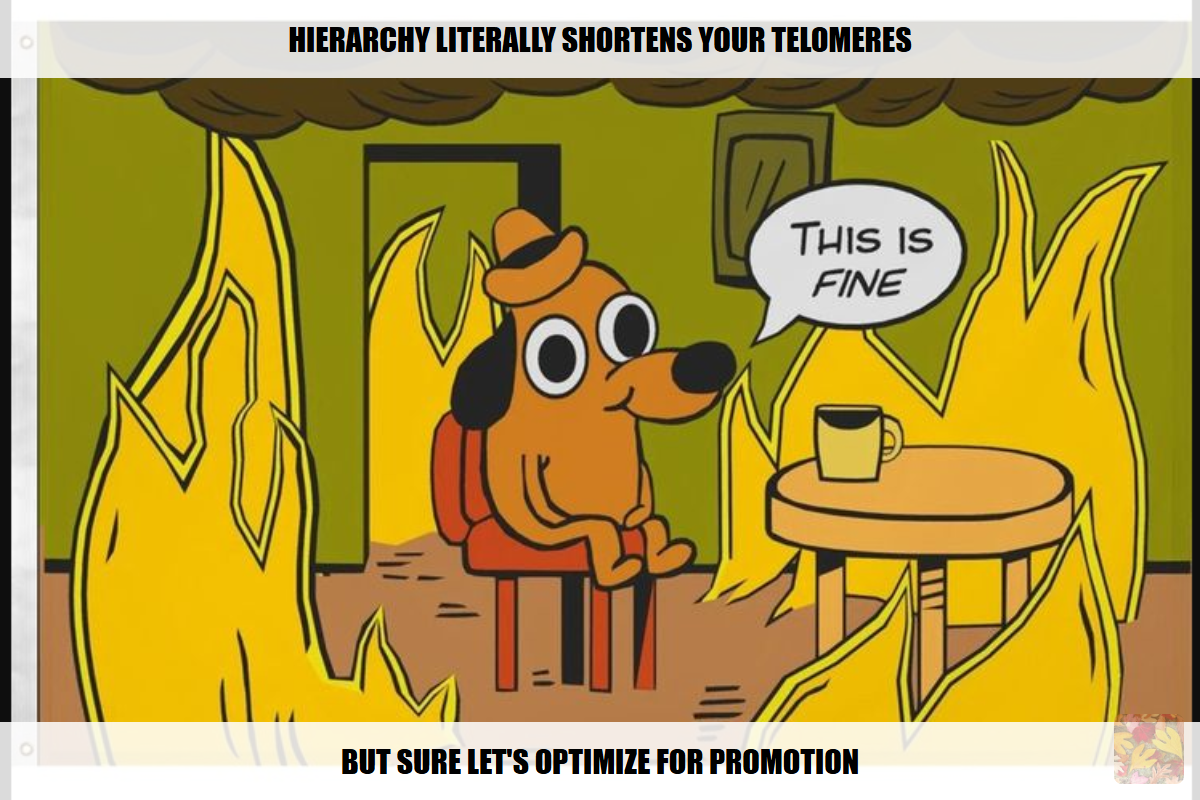
Hierarchy itself is lethal. Not poverty. Not deprivation. The gradient.
Robert Sapolsky (30 years studying baboons) Subordinate males showed elevated cortisol, atherosclerosis, impaired stress recovery. When a TB outbreak killed the dominant aggressive males, the hierarchy collapsed. The surviving subordinates' cortisol normalized. The biology followed the social structure.
Carol Shively (30 years studying female macaques) Subordinate status → visceral fat → atherosclerosis → heart disease. Hierarchy literally causes heart attacks.
Elizabeth Blackburn (Nobel Prize, 2009) Proved chronic psychological stress shortens telomeres. Poverty and subordination literally age you at the cellular level.
The stratification is real. It kills. This is not in dispute.
The teachers did not build it. They work inside it. Most of them are fighting it with the only tools they have.
The Education Gap
Benjamin Bloom, Taxonomy of Educational Objectives (1956) Hierarchical model of cognitive learning: knowledge, comprehension, application, analysis, synthesis, evaluation. Most classrooms stop at "remember."
Howard Gardner, Frames of Mind (1983) Eight intelligences. Demolished the single-IQ model.
E.D. Hirsch, Cultural Literacy (1987) Core knowledge must be in one's own head, not just accessible. The gap between those who carry the canon and those who don't is the gap between participation and exclusion.
Daniel Goleman, Emotional Intelligence (1995) Popularized EQ as measurable competencies distinct from IQ.
Reuven Bar-On, The Emotional Quotient Inventory (1997) First validated psychometric measure of emotional intelligence.
The Vitruvian Quotient (Cooper, 2025/2026)
VQ = KQ + RQ + EQ + LQ + CQ + SQ + MQ + BQ
Eight quotients mapped to neurological substrates:
- Knowledge (KQ) - temporal/parietal
- Reasoning (RQ) - prefrontal/parietal
- Emotional (EQ) - limbic/amygdala
- Language (LQ) - Broca's/Wernicke's
- Creative (CQ) - default mode network
- Social (SQ) - mirror neuron/TPJ
- Motor (MQ) - motor cortex/cerebellum/spacial-awareness
- Biological (BQ) - autonomic/hormonal regulation/perception
The scientific foundation for paideia that the Greeks intuited but could not formalize.
We have 600 years of diagnosis. We have 200 years of engineering. We have zero years of a global education framework designed to produce people who can operate at this level.
V. The American Timeline and the Carroll Romance
Carroll Quigley, The Evolution of Civilizations (1961) and Tragedy and Hope (1966), proposed that civilizations evolve through seven distinct stages:
- MIXTURE - Different cultures combine, new synthesis begins
- GESTATION - New civilization forming but not yet distinct
- EXPANSION - Instrument of expansion works, surplus flows, growth
- AGE OF CONFLICT - Instrument becomes institution, fighting over shrinking pie
- UNIVERSAL EMPIRE - One power dominates
- DECAY - System declines
- INVASION/DESTRUCTION - Outside forces conquer
The Core Mechanism: Instrument → Institution
This is Quigley's key insight. An "instrument" is a social arrangement that solves real problems. Over time, it transforms into an "institution" - the same arrangement now serving its own purposes, regardless of the original need. The system forgets why it was built.
This transformation IS Historical Apoplexy at civilizational scale.
The Carroll Romance
Quigley wrote in 1961 - peak American triumphalism, Cold War framing. He claimed Western Civilization uniquely "circumvents" - reforms from Age of Conflict back to Expansion. This is the romance.
The problems:
- Western "Expansion" phases were often funded by colonial extraction
- What looks like "circumvention" may be exporting the Age of Conflict elsewhere
- China had multiple dynastic cycles with renewal phases
- Islamic civilization had golden ages and reformations
- "The West is unique" ignores that other civilizations also reformed - they just got colonized mid-cycle
Quigley was at Georgetown, training future State Department officials. Bill Clinton cited him as influential. The framework conveniently positions America as the latest "circumvention."
The exceptionalism was ideology. The mechanism is real.

Quigley's Seven Phases Applied to America (Cooper Analysis, 2016/2026)
PHASE 1: MIXTURE (1620) Puritan-Native American first contact. The Mayflower. But the mixture was deeper - Cromwellian republican ideology from the English Civil War traveled to America. Virginia, Massachusetts, Pennsylvania, Kentucky adopted "commonwealth." The thread from Cromwell's regicide to American republicanism.
PHASE 2: GESTATION (1620s-1800s) Indian Wars. Buffalo genocide as deliberate policy. 75 million buffalo → near extinction. The civilization forming, consolidating, eliminating alternatives.
PHASE 3: EXPANSION (1804-1867) Louisiana Purchase doubled territory. Lewis & Clark. California Gold Rush. Alaska Purchase. The instrument of expansion was working.
PHASE 4: CONFLICT (1861-1877) Civil War - internal class/regional conflict. Reconstruction was a failed reformation attempt. The instrument was becoming institution.
PHASE 5: UNIVERSAL EMPIRE (1893-1945+) Chicago World's Fair. WWI intervention. WWII - arsenal of democracy. Bretton Woods - dollar as world reserve currency. America achieved Universal Empire.
PHASE 6: DECAY (1921-present) Romans who survived childhood regularly lived to 70+. 1900 America: life expectancy ~47 years. Progress is not linear.
White Castle (1921) - first fast food chain. Beginning of industrial food.
Mid-1960s: more than 40% of US adults smoked in the peak use of the modified tobacco cigarette.
Obesity epidemic now affecting every segment of population.
Institutional decay:
- Healthcare system serves insurers, not patients
- Education system produces compliance, not thinking
- Political system serves donors, not citizens
- Media serves attention metrics, not information
PHASE 7: INVASION (TBD) Left open for the reader to determine.
Invasion may also be internal: the enforcement apparatus of a civilization turning against its own population, the institutions built to serve the civilization now consuming it.
Conclusion: The Circumvention Isn't Happening
Quigley believed Western Civilization uniquely reformed, circumvented, returned to Expansion. The American evidence suggests otherwise. We are watching all seven phases proceed.
The question is no longer whether America will follow the pattern.
The question is what comes after.

What Comes After: The Resource Library
The factory proof shows 293,000 manufacturing facilities in the US. 10,000-15,000 would suffice for universal material abundance. That's a 20-30x overcapacity running at 77% utilization.
The grocery proof shows 75.7 cents of every food dollar goes to marketing, distribution, and gatekeeping. The farm share is 24.3 cents. The commissary system has operated at cost since 1867 - 157 years of proof that the model works. Funded by all taxpayers, available only to military families. The infrastructure exists. The decision to extend it does not.
Combined: we have far more factories than needed, producing goods that cost 20-40% of their retail price. The system is not resource-constrained. It is not technology-constrained. It is permission-constrained.
The permission is called money.
So what does abundance actually look like?
Fresco called it the resource library. I'll make it concrete.
You walk into a building the way you walk into a public library today. You check out what you need. The categories are tiered by permanence:
Food is constant. You need it every week. It flows like water. If you don't request 100 lbs of food in a month, someone checks in to see if you're alright.
Clothes are semi-permanent. You need them, you keep them, they wear out, you get more. You cannot request 100 t-shirts in one month. That's not a need. That's hoarding.
Cars and houses are permanent. One person, one home, one vehicle, until you don't need it anymore. Exceptions exist - families grow, people relocate - but the default is stability, not accumulation.
Everything shifts to maximum recyclability. Unlike current libraries, this system assumes most goods fall into strict categories with known return cycles. Currency might survive for a special tier - personal artwork, luxury vehicles, custom goods. That tier exists for people who want more than the baseline. The baseline is abundance.
The unlock mechanism is simple: complete education. Serve 2-4 years in public service - local infrastructure, emergency services, public office, production, volunteer corps. You finish around 25. Then you're in.
This is not utopia. This is the US military commissary model. Except rather than forcing Americans to pay for it and never benefit from it, this is extending to everyone else who funds it. This is 293,000 factories producing for need instead of demand. This is the 75.7 cents returned to the people who grew the food.
The math was done. The capacity exists. The model has been operational since 1867.
The only thing missing is the education system that produces people who can understand why this is possible - and the cultural memory that it was already calculated.
That is Historical Apoplexy. And this is the invitation to remember.
The Maturation Problem: How Do You Rear Humans in a World Made Easy?
This is the objection that kills every abundance proposal before it starts. If you remove struggle, you remove growth. "Hard times create strong men" is folk wisdom, but the developmental science underneath it is real.
The Neuroscience of Maturation
The prefrontal cortex - responsible for executive function, impulse control, long-term planning, and moral reasoning - does not fully mature until approximately age 25 (Arain et al., 2013, NIH PMC3621648). This is not metaphor. The myelination of prefrontal circuits is physically incomplete until the mid-twenties. The brain is literally under construction for 25 years.
Recent work (The Conversation, Dec 2025; McGill OSS, Aug 2025) clarifies that 25 is not a cliff edge - the brain continues developing throughout life. But the structural architecture is substantially complete by 25. This is the biological basis for the 25-year education timeline.
The Developmental Sequence
The science maps cleanly onto VQ quotients by age:
Piaget (1952): Cognitive development proceeds through four stages - sensorimotor (0-2), preoperational (2-7), concrete operational (7-11), formal operational (11+). Abstract reasoning, hypothesis testing, and systematic problem solving emerge in adolescence. This maps to KQ and RQ development.
Erikson (1959): Eight psychosocial stages, each defined by a crisis that must be resolved:
- Trust vs. Mistrust (0-1) → BQ foundation
- Autonomy vs. Shame (1-3) → MQ foundation
- Initiative vs. Guilt (3-6) → CQ foundation
- Industry vs. Inferiority (6-12) → KQ foundation
- Identity vs. Role Confusion (12-18) → EQ + SQ formation
- Intimacy vs. Isolation (18-25) → SQ + EQ consolidation
Each stage requires a challenge. Skip the challenge, the crisis goes unresolved, and the quotient stays underdeveloped.
Vygotsky (1934): The Zone of Proximal Development - learning happens in the gap between what you can do alone and what you can do with guidance. Too easy = no growth. Too hard = shutdown. The zone must be calibrated. This is the theoretical basis for structured learning trials.
Kohlberg (1958): Moral development proceeds through six stages across three levels - preconventional (punishment/reward), conventional (social conformity), postconventional (universal ethical principles). Most adults never reach postconventional. The education system stops pushing at conventional. This maps to EQ + SQ + RQ integration.
Bjork (1994): "Desirable difficulties" - learning that feels harder in the moment produces better long-term retention and transfer. Struggle is not a side effect of learning. It is the mechanism. Productive failure outperforms errorless learning.
The Affluence Problem
Suniya Luthar (2003, NIH PMC1950124) - "The Culture of Affluence: Psychological Costs of Material Wealth." Affluent children show elevated rates of substance abuse, anxiety, and depression compared to inner-city peers. The mechanism: achievement pressure without genuine challenge, isolation from consequence, and absence of meaningful struggle.
This is the abundance trap. Remove material hardship without replacing it with structured developmental challenge, and you produce the pathology Luthar documents.
The Rites of Passage Literature
Cross-cultural anthropology (van Gennep, 1909; Turner, 1969) documents that virtually every human society creates structured ordeals for adolescents - physical trials, endurance tests, isolation periods, community service requirements. These are not cruelty. They are developmental infrastructure. The societies that abandoned them didn't produce freer humans. They produced unfinished ones.
The 25-Year VQ Curriculum
The maturation science, the developmental psychology, and the cross-cultural evidence converge on a single design requirement:
Abundance requires a 25-year structured maturation program that develops all eight VQ quotients through calibrated challenge at every stage.
Ages 0-6: Foundation (BQ + MQ + LQ) Biological regulation, motor development, language acquisition. The body and the voice.
Ages 6-12: Capacity (KQ + CQ) Core knowledge acquisition (Hirsch), creative problem-solving, hands-on building. The mind and the imagination.
Ages 12-18: Identity (EQ + SQ + RQ) Emotional regulation under pressure. Social navigation in diverse groups. Formal reasoning and ethical argumentation. Learning trials begin - physical challenge, competitive pressure, real consequence. Rock climbing. Underwater tasks. Speed. Contact. Not simulated. Real.
Ages 18-24: Integration (All quotients under load) The trials escalate. Combat-calibrated competition. Dangerous physical events. High-speed racing - in the future, aerial. Weapons proficiency. Science olympiad-level technical challenge combined with gladiatorial physicality. Humanoid opponents offer infinite difficulty scaling - a central system adjusting challenge in real time across unlimited competitors. The capstone year at 24 is a sustained competition - physical, intellectual, creative, social - administered across an entire year.
Age 25: Reflection and Leadership The final year is not competition but administration. The 25-year-olds oversee the 24-year-olds' trials. They design challenges. They push harder. They learn what it means to be responsible for someone else's development. This is the transition from student to citizen.
Service requirement: 2-4 years in any public capacity - infrastructure, emergency services, military, public office, production, education, volunteer corps. By 25, you have completed education, survived trials, served your community. Then you're in.
The Military Will Get There First
The US military already gravitates toward this structure - but blandly militarized. Starship Troopers. The Alien franchise. Service guarantees citizenship. Fresco imagined the abundance but never specified the developmental pipeline. The military specifies the pipeline but can't imagine the abundance.
The version that works looks more like Starfleet Academy - lightly depicted, never explained in Star Trek, but structurally implied: rigorous education, physical trials, service commitment, then access to a post-scarcity civilization.
The middleclass will not build this. They will sit and wait until the military, and militaries around the world, secure this future for themselves. The question is whether civilian society designs its own version or inherits the military's.

Closing: The Arc
4,400 years ago, people at 14,587 feet achieved sedentary abundance with fishing hooks.
600 years ago, Ibn Khaldun mapped why civilizations rise and fall.
100 years ago, German scientists calculated Earth could sustain 8 billion people with 1920s technology.
80 years ago, food self-sufficiency was already in play and we chose guns over butter.
60 years ago, Jackson named what schools actually teach and nobody listened.
50 years ago, Bowles and Gintis made a targeting error that discredited the structural critique by pointing at teachers instead of the gradient.
30 years ago, Marmot proved hierarchy kills with universal healthcare and full employment.
Today, 173,000 terawatts hit Earth and we burn fossils. Thorium sits unused. The Moon has 2,000 years of fusion fuel. Jupiter has 45 quadrillion years.
The hardware exists. The energy path exists. The governance models exist. The engineering is specifiable. The education framework now exists.
The species isn't stuck because the math doesn't work.
It's stuck because most people have never heard of any of this.
That's the arc. And it's all lit review. Extremely little of it is debatable.
The Great Conversation never stopped. You just weren't invited. This is your invitation.