

Every few decades a genuinely new technology arrives, the money arrives behind it, and the money arrives in a larger quantity than the technology can absorb. We've done this before. Many times.
The technology is real. The demand is real. The equity is still a bubble.
That sentence sounds like a contradiction only until you have watched it happen five times.
This is the general map. Five booms, five busts, from the 1840s to the machine you are reading this on. The deep dive on each one lives in its own article. What follows is the shape they share, because once you see the shape you stop arguing about whether a thing is a bubble and start asking the better question. Which part survives the bust.
The shape every cycle takes
Carlota Perez gave the cleanest account of this in Technological Revolutions and Financial Capital. A major technology does not diffuse in a straight line. It runs through an installation period, when new companies and speculative money rush in together and valuations decouple from anything a spreadsheet can defend. Then it hits a turning point, which is the crash. Then it enters a deployment period, when the surviving infrastructure spreads across the whole economy and does the quiet work it was always going to do.
The crash is not the refutation of the technology. The crash is the moment financial capital, which ran ahead of reality during the frenzy, gets marked back down to what production can actually pay. The rails stay in the ground. The shareholders do not stay solvent. Hold those two facts at once and the rest of this is just history filling in the columns.
Railways, 1840s to 1870s
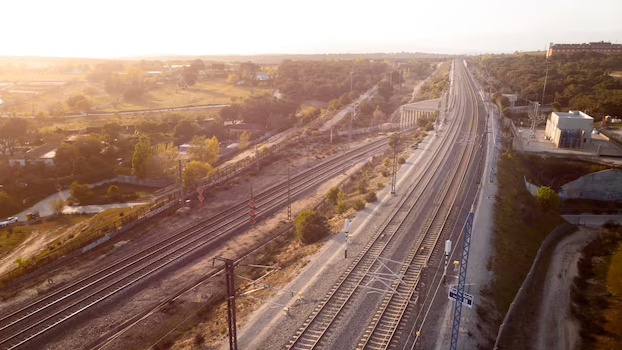
The railway was the single most transformative technology of the nineteenth century, and it still produced one of the largest equity manias ever recorded. In 1846 alone the British Parliament passed 272 railway acts and authorized capital near the size of Britain's entire annual output. Ordinary savers bought partly-paid shares, which let them control a large position for a small deposit, which is leverage wearing a respectable coat.
George Hudson, the man the press called the Railway King, paid dividends out of investors' own capital to keep the story alive, until tightening money turned every partly-paid share into a forced sale and the King went bankrupt. Across the Atlantic the same engine ran a generation later. The Panic of 1873 began when Jay Cooke and Company failed on its railroad financing, and the failure dragged the United States into a contraction so long they called it the Great Depression until a worse one took the name. The investors were ruined. The network they built carried British and American industry for the next hundred years.
Autos and power, 1920s
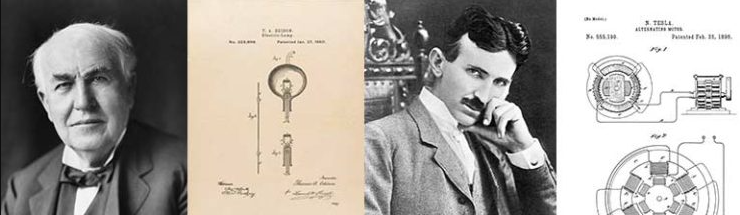
The 1920s sold two new utilities to the public at once. The car, and the electrified grid behind the wall socket. Both were real. Both drew a crowd that did not survive contact with arithmetic.
Nearly two thousand American companies tried to build automobiles in the first two decades of the century. By 1921 the count was already down to 88, by 1927 it was 44, and on the far side of the Depression it was three. New-car sales fell roughly 75 percent between 1929 and 1932. Ford employed 128,000 people in the spring of 1929 and 37,000 by the summer of 1931. The power side told the same story with a different prop. Samuel Insull assembled a pyramid of more than eighty utility holding companies, a structure so large its 1932 collapse ran ten times bigger than the famous Kreuger failure in Europe and wiped out hundreds of thousands of small shareholders. Radio Corporation of America, the decade's purest technology darling, rose about two-hundred-fold and then did not see its 1929 price again until the 1960s. The cars kept running. The grid kept the lights on. The certificates did not.
Transistors, 1950s to 1960s
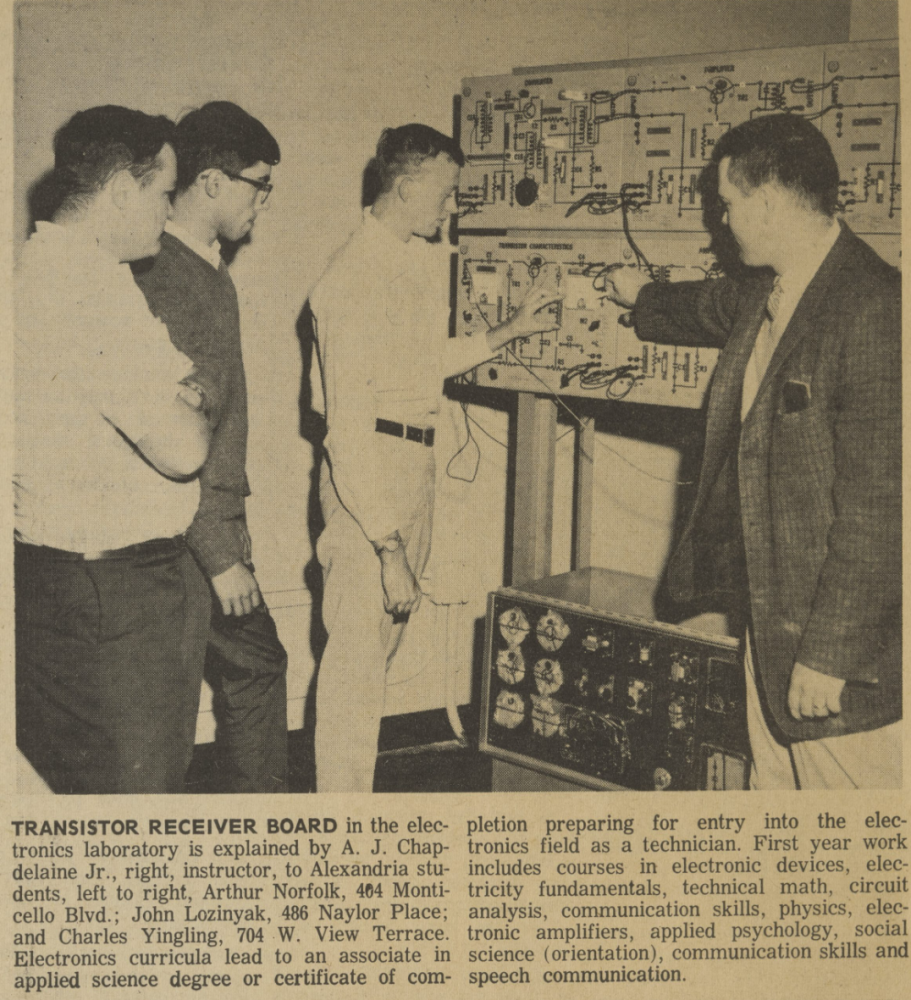
When the space age arrived, the word that moved a stock was "tronics." Burnham Electronics, Powertron, Vulcatron. Investors bid up almost anything with an electronic suffix, and as Burton Malkiel documented, companies cheerfully bolted the suffix onto unrelated businesses to catch the bid. The tronics boom came back to earth in the 1962 market slide as fast as it had left it.
Underneath the froth sat the actual invention. The transistor, and the integrated circuit that followed, became the substrate of every machine built since. Texas Instruments survived. The Fairchild lineage survived and seeded Intel. The pattern is already familiar by the third example. The label was a bubble and the silicon was a century.
The internet, 1990s to 2001

This is the one most of the audience lived through, so the numbers need no translation. The NASDAQ Composite rose 572 percent from the start of 1995 to its peak of 5,048 on March 10, 2000. It gained 86 percent in 1999 by itself. The merger of AOL and Time Warner seemed to certify that a new economy had replaced the old rules about cash flow. Then it imploded, and somewhere around nine in ten of the dot-com startups did not survive it.
The most expensive overbuilding happened where you could not see it. Telecom companies laid far more fiber-optic cable than 2001 had any use for, a glut of "dark fiber" sitting unlit in the ground. That glut became the cheap backbone of the next decade. Netflix, YouTube, and the entire cloud ran across capacity built by companies whose shareholders had already been wiped out. Amazon survived. eBay survived. Google survived. The fiber outlived almost everyone who financed it.
AI and robotics, 2020s to today
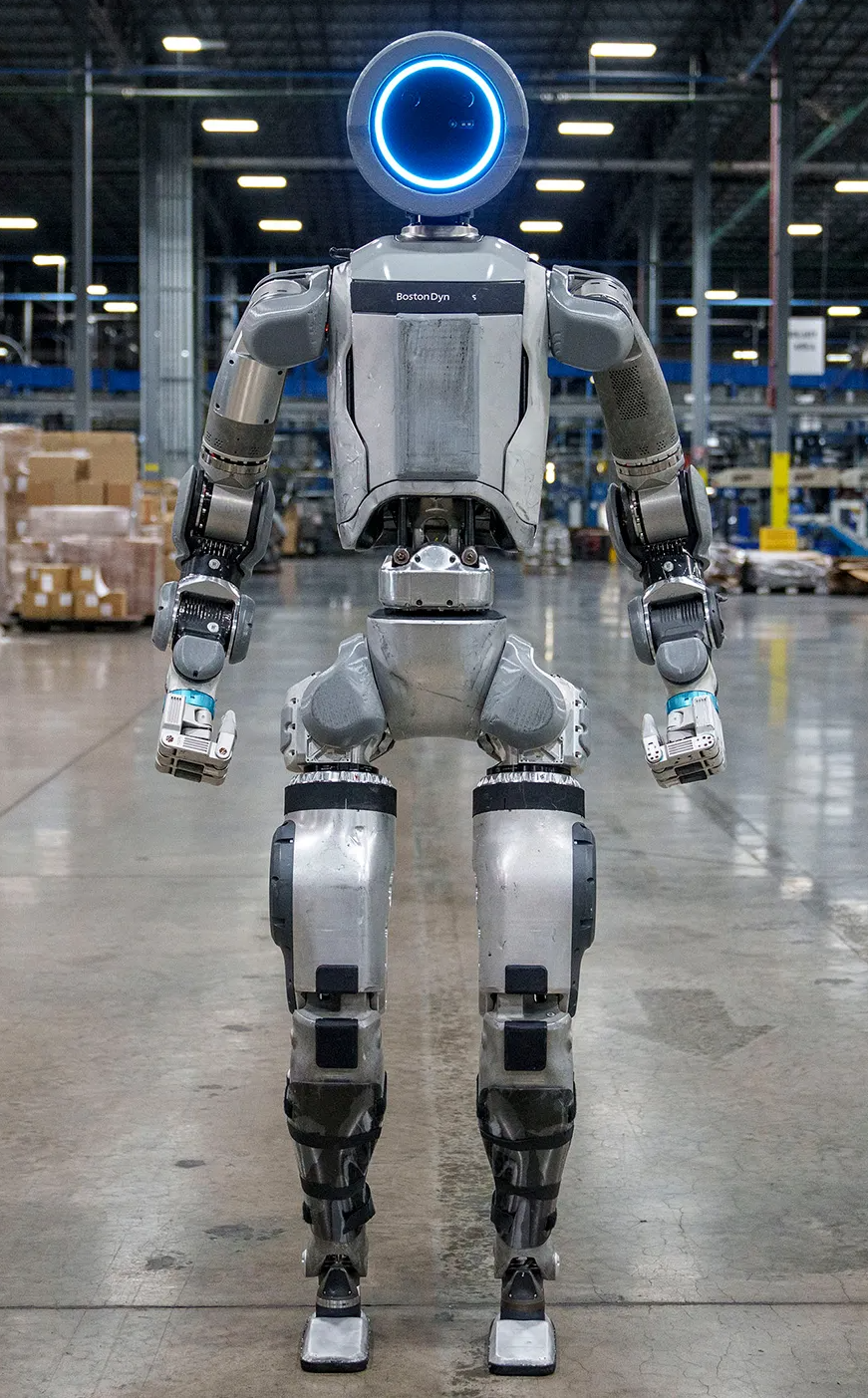
Now the live one. Capital expenditure on AI infrastructure is running into the hundreds of billions of dollars a year, with a single tranche of announced data-center spending near 400 billion. A 2025 study from MIT found 95 percent of organizations deploying generative AI saw little or no measurable return, which is the kind of number that belongs to an installation period rather than a deployment one. The financing has gone circular, with chipmakers, cloud providers, and model labs investing in each other in ways that inflate the same demand they are counting. Even the optimists know what they are looking at. Jeff Bezos calls it a "good bubble," and firms like KKR argue the infrastructure will compound long after the froth clears, which is the railway lesson and the fiber lesson stated in a press release.
If the pattern holds, the equities will overshoot and correct, and the build will remain. The phrase already circulating is "dark compute," the AI echo of dark fiber. Idle accelerators and half-used data centers become the cheap substrate that some company not yet famous uses to build the thing this cycle was actually for. Where exactly we sit on the curve is the open question, and it is the one worth you paying attention.
Whether AI is real is not the question. The railways were real too.
What to do with the pattern
The comforting version of every bubble story is the one that lets you dismiss a technology after the crash. That version gets it backwards. The crash prices the equity, not the invention. The rails, the grid, the silicon, the fiber, and soon the compute all outlived the manias that funded them, they all went on to change the world as was said, and the fortunes were made by the people who could tell the difference between a real technology and a safe security.
Those are not the same thing. Valuable does not mean safe, and a popped bubble does not mean a dead technology. Hold both and you are reading the cycle instead of getting read by it.