
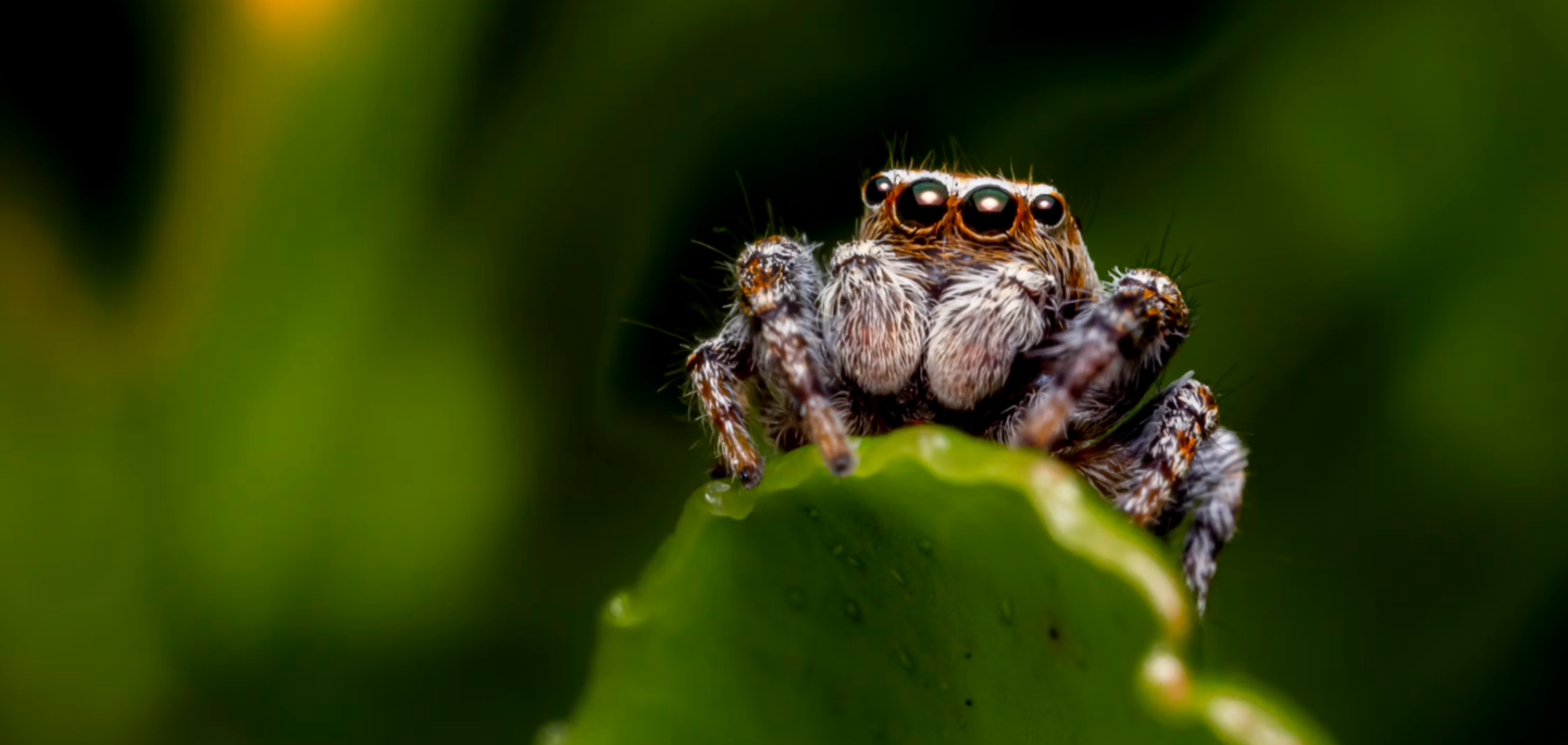
If there is really an intelligence capable of learning and understanding music within an animal why would you leave outside? Why wouldn't you help it?
Life is genuine suck. Let's be real. Only affpaths who have never died or experienced the severance of a limb or a major attack of some kind will believe life is great. They can just have drinks with their friends on the weekend and recharge their batteries and watch Netflix and then everything will be ok.
But for the rest of us in all of cognition on this planet, the daily motions are dangerous, treacherous, and a wrong move could spell the end or worse.
Can't think of something worse than death? You may be an affpath.
If there is really an intelligence capable of learning and understanding music inside of an octopus then for the love of empathy I guess I better do something.
Intelligensicus
Intelligensicus is a plan to raise the cognition on the globe. Its that simple. But since this is the article and the research proposal I made then we get to talk about something else. Smarter animals can run away from fire more quickly and protect themselves from humans more cleverly. Anything beyond that isn't smart conservation. "They can protect their young better" "they can eat more so they wont starve" "they can evade predators more cleverly" all of which is bad conservation. You know what's actually anti-conservation? People and fires.
Doing something like this because you want to help the animals be better animals is exactly the same logic that feeds a bear only to find out they are going to shake you down for more. Bears have a unique issue that when fed they attach to that heavily and in aggressive ways that can toggle their own apex understanding of the wild itself. This is why they are often euthanized as where many other species can just be put back in the wild.
So no, you don't help animals become better versions of themselves to help the animal. You do it to help the biosphere and so the animals can learn to save themselves. But you certainly don't do it just to get your Ph.D.
It appears that on planet earth there are differing types of cognitive modes and there are differing types of cognitive clusters within the brain. It would also appear that in the mammal world specifically we find that these manifest more or less from species to species and that has allowed scientists to study varying forms of cognition as though they have their own similarities and differences. There is no unified theory of cognition across species yet and there is none in the works either but its clear to see that from species to species, even outside the mammal world and in it there are varying degrees of strengths and weaknesses. For example, crows are excellent puzzle solvers and even have their own vocal language, but in the octopus for example their strengths in cognition look much different in the types of puzzles and forms of communication octopi are better at solving.
We know that animals are going extinct at a rapid pace. We also know that humans are one of the causal factors. But what about the past? Works of many scientists are looking into megafaunal extinctions up to 10,000 years ago and asking the question: did early modern humans hunt large, land-dwelling megafauna to extinction? We have proven that humans trapped and killed more meat than they ate just prior to figuring out widespread agriculture, conveniently around the time some of these species went extinct. But get one thing clear: conservation is interested in keeping things the way they are.
This logic should not be knocked. The work is real and it is important. But the entire theory doesn't adjust for questions like "is this really the way things should be?" or "is there anything more important than what I'm focusing on right now?"
That's where I come in. Intelligensicus is a simple catch and release program designed deeply around specific species and what we know about them entirely. It accounts for all the most major and obvious concerns and aims to only target an uplift in the collective cognition of co-intellects within a given area. In the real program, that area is the whole Earth. But we gotta start small. So, we start with an octopus and a cove.
I can attest to the intelligence of this little critter from personal experience.
When I was a kid back in the 1990s we loved going to the zoo and to aquariums. And I mean all around the country. Eventually, we came to Shedd's aquarium. Now long story long my step brothers were with their mom back in Kentucky and my step dad was busy this day so it was just my mother and myself. This meant I got to do extras. Mom got the personal tour guide and since inflation hadn't quite ruined the country yet we could afford it in the midwest. So boy was I a happy 90s kid when I got the grand tour and could ask questions freely.
So if you've never been to Shedd's aquarium is quite big. At least back then it was big, beautiful, and FULL of all kinds of different tanks.
The one that stuck with me was the octopus. I never saw it happen myself, but the guide told us this one had been slipping out of its tank at night, crossing to a neighboring tank to hunt, and returning before morning, and it fooled the staff for a while before anyone caught on. I was a kid, and I believed every word, because it was obvious even then that this was no ordinary animal. Decades later I found out the guide was not spinning a tale for a wide-eyed nine year old. Aquarists have documented exactly that behavior since the 1870s. The octopus is real, its mind is real, and it has been waiting the whole time.
So no, you don't leave that intelligence outside. You help it. And now let me show you what that actually means.
Look at what is already out there. The octopus carries five hundred million neurons, about a dog's worth, and two thirds of them live in its arms. It is not one brain. It is eight, thinking and reaching at once. A jumping spider the size of a grain of rice will study a route to its prey, then execute a planned detour that takes it out of sight of the target and lands it in ambush, holding the whole map in its head the entire time. A raven will plan for a tool it cannot yet use and barter for it up to seventeen hours later, a feat we thought belonged to great apes. And Robert Sapolsky watched a troop of wild baboons invent a calmer, smarter culture and then transmit it to strangers who joined years after the change began. These are not tricks. These are minds, already here, already teaching each other.
Here is the part that turns a wonder into a plan. Behavior can be raised, and it can be inherited, fast. The silver fox went from wild to tame in a handful of generations under the right conditions. Machines can now read this cognition at a scale we never had, and a project called CETI is decoding the sperm whale's own phonetic alphabet as I write this. So the tools are in hand. The minds are in the water and the trees. The only thing missing was someone willing to say it out loud.
So here it is. Intelligensicus is a catch and release program run out of a network of small outposts, each a clear enclosure sited in an animal's own water, each engineered to leave the habitat richer than it found it. An animal comes in, works a task built around something it already does, earns a reward matched to what it actually wants, and is released a little more capable than before. Do that across enough of a population and enough of its generations, and the gain stops being one clever animal and becomes the species' own inheritance, taught down the line, kept for good. Start with an octopus and a cove. Scale it to the whole planet.
That is the reveal. We can add co-intelligent life to this world, on purpose, and let it keep the gift. I do not know many things worth more than that.