
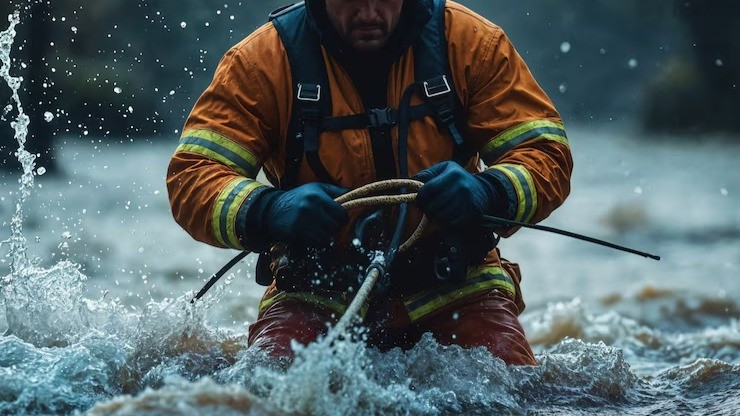
Imagine firefighters rush into a flooded neighborhood swallowed by relentless floodwaters during a devastating storm. Every street is a river, every home a potential trap. As they race to save lives, an unseen danger lurks beneath the murky depths. Electric currents pulsing from a hidden battery or ground mounted solar power system bring electricity flowing through the floodwater. An almost unimaginable hazard turns a rescue mission into a heart-pounding battle against both nature and unseen man-made forces.
Electricity traveling through the water almost never winds up actually happening. Why? Because this scenario is exactly the type of thing fire department review authorities worry about when processing their review. Oftentimes a solar project may need various permits from several authorities.
Some of the biggest safety requirements are imposed on large ground-mounted photovoltaic (PV) systems or batteries and energy storage systems in flood-prone areas known as "floodplains." When solar panels generate electricity, they produce current that can energize nearby water if the system is flooded. This does create a dangerous situation for anyone wading through the water, especially emergency responders trying to save lives.
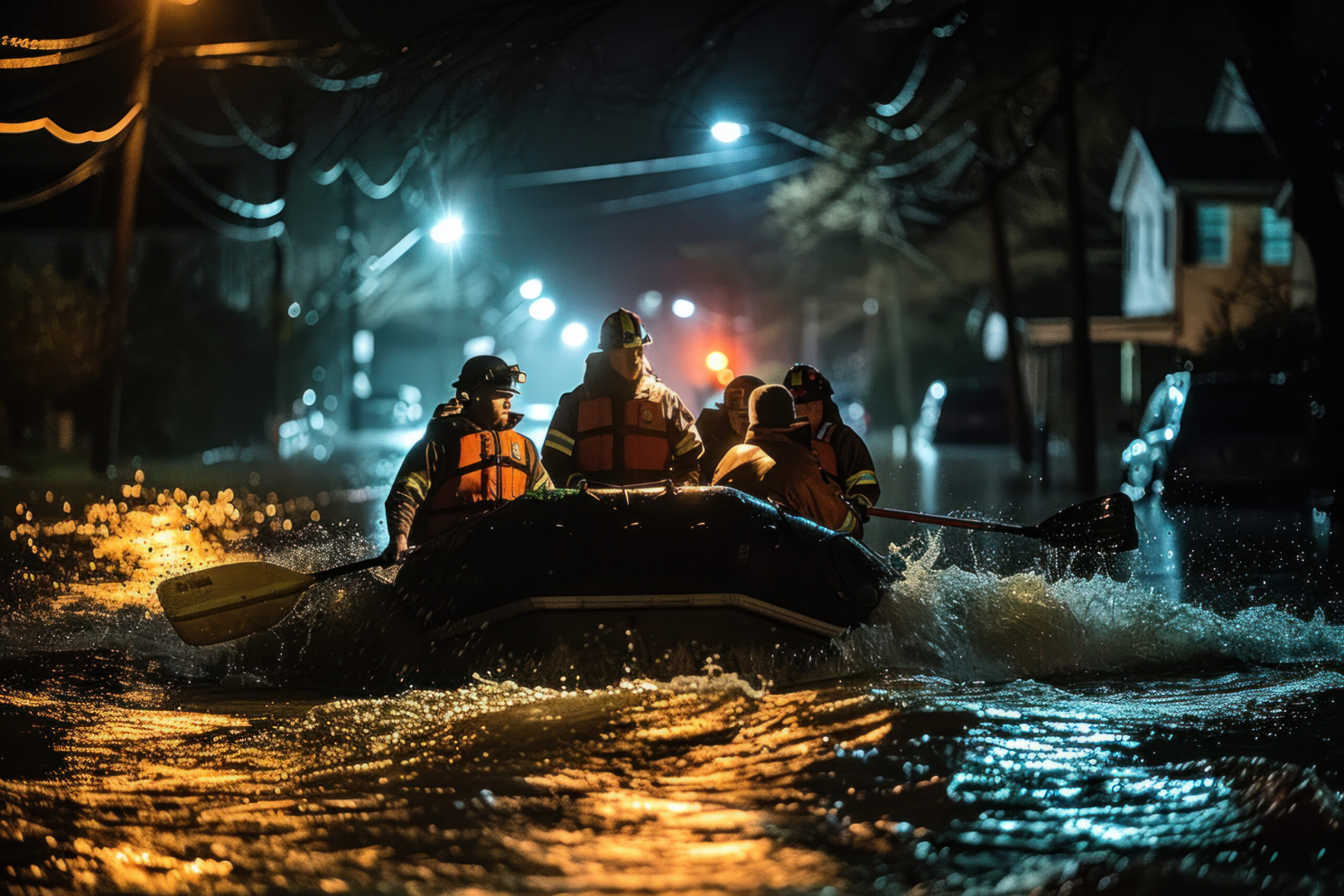
The risk isn't just theoretical.. Flooded electrical systems can:
- Cause short circuiting: Water can cause short circuits, leading to uncontrolled discharge and thermal runaway.
- Cause dangerous chemical reactions: Lithium can react aggressively with water. This produces lithium hydroxide and hydrogen gas and hydrogen mixed with air is explosive. Additionally, battery electrolytes breakdown and release toxic and flammable gases like hydrogen fluoride (HF).
- Expose environmental hazards: These harmful chemical reactions can contaminate water sources and pose risks to ecosystems. Storm damages can allow harmful chemicals, including lithium salts and heavy metals into floodwaters. This is especially concerning for environmentally sensitive areas.
Additional Concerns:
- Delayed fires: Fires can occur not only immediately but also days or weeks after water exposure due to ongoing chemical and thermal reactions within the battery.
- Saltwater and Coastal Development: Saltwater is particularly dangerous because of greater electrical conductivity. This accelerates short circuiting and corrosion. This then increases the likelihood of various dangers listed above. Coastal Development Permits and the planning authority behind them are particularly concerned with this risk. It is important to know if your home or project is located in Hawaii, California, Massachusetts, etc.
How do we keep people safe? Permitting is that last line of defense where the people require a standard.
To address this, permitting and utility NEC guidelines are electrical codes that require large PV and energy storage systems to be built in certain ways. Sure, engineers and system designers are supposed to know what they are doing. But a permit certifies that an inspection process has occurred on behalf of the people, and by a similar professional employed by the people, ensuring these codes are adhered to.
In floodplains we have several added safety requirements. You may even need various subcontractors like surveyors to verify the final position of a battery or PV system in order to clear a final permit or PTO (permission to operate).
Jurisdictions also require UL listed products be used. The Underwriters Laboratory is primarily concerned with testing consumer products.
NEC compliant rapid shutdown systems are a must. These systems automatically shut down the energized electrical components when flood conditions are detected or when other emergencies occur. This means that as soon as flooding happens, the system quickly de-energizes.
Split Arrays is a tactic used in utility scale projects where arrays are split with individual shutdown systems.
When construction companies follow proper protocol regarding compliance it prevents the risk of electricity flowing through water and other hazards and, moreover, reduces the risk to firefighters and disaster survivors.
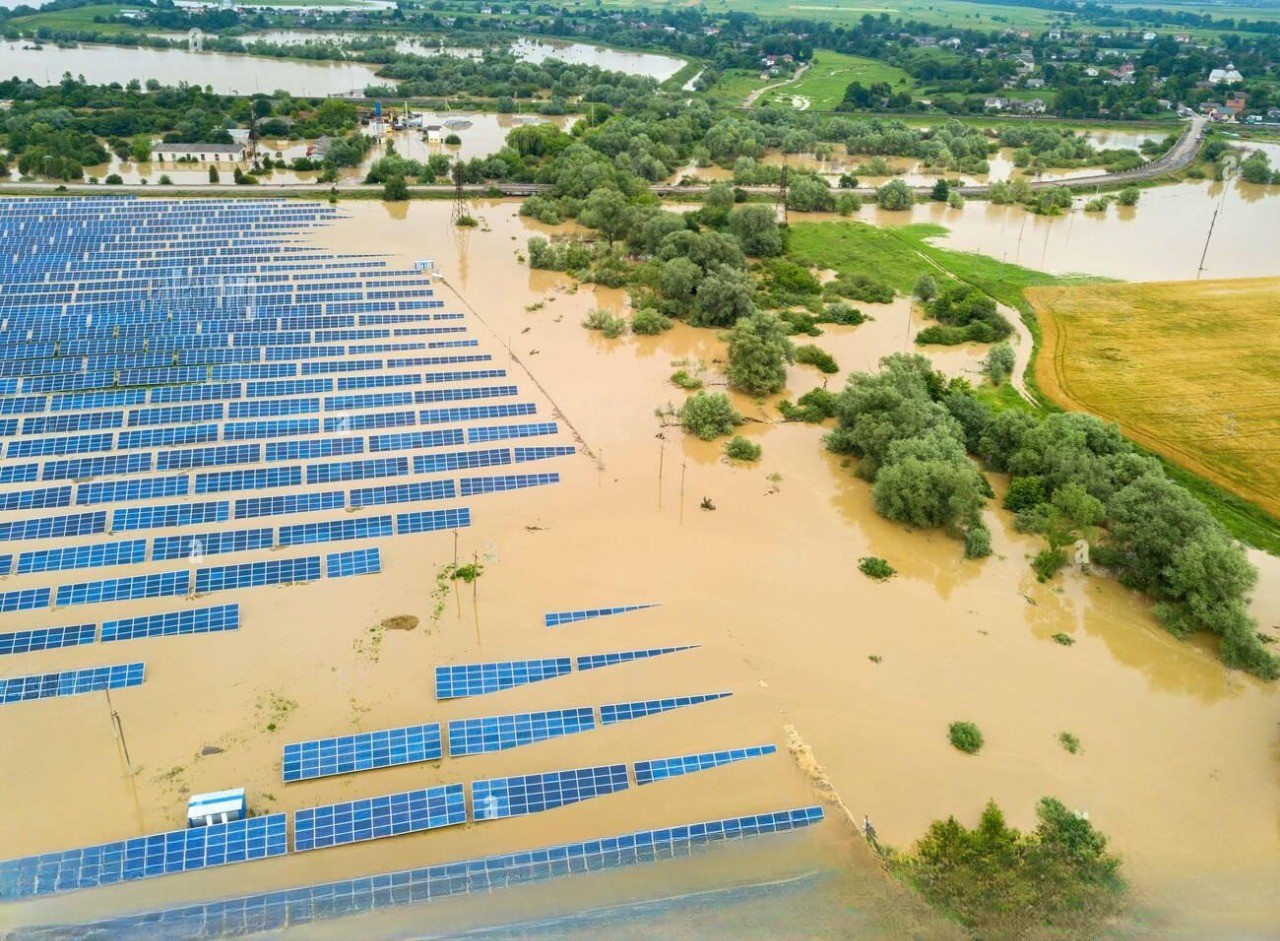
Additional safety measures include:
- In residential solar, be sure your solar installer is installing electrical components like batteries, inverters, and junction boxes above expected flood levels to avoid water contact.
- Using ground fault detection and interruption devices to detect electrical leakage and shut down the system if faults occur.
- Conducting additional flood risk surveys before or after contacting a contractor to install ground-mounted PV systems to ensure the site is suitable.
- Ensure that after a flood event, a qualified technician inspects the PV system before it is turned back on, to check for damage and prevent hazards. This goes beyond safety, protecting the value of your system.
If water could be charged by something nearby always assume that it is and take necessary precaution.