
Imran Cooper - February 2026
The Tether Is the Mission
A Venus aerostat floats at 50-55 km in conditions comparable to a warm day on Earth - 27°C, 0.5 bar. But the tether hanging beneath it reaches into radically different environments. At 40 km: 143°C, 3.5 bar. At 35 km: 190°C, 5.6 bar. At 30 km: 230°C, 12 bar. At the surface: 462°C, 92 bar.
Every altitude band is a different laboratory, a different factory, a different opportunity. The aerostat doesn't just float. It reaches.
Ten tethered devices exploit this vertical reach.
1. Sulfuric Acid Cracker (240 kg)
The clouds are not the enemy. They're the water supply.
An inverted PTFE cone funnel (2m diameter) at 48-52 km collects sulfuric acid aerosol from the atmosphere. Gravity feeds the acid down an 8-12 km PEEK tether to a thermal cracking module at 38-42 km, where iron oxide catalyst decomposes it: H₂SO₄ → H₂O + SO₃.
Products per month: 30-50 kg water, 10-15 kg sulfur, 15-25 kg oxygen. Eight crackers per 100 aerostats yield 240-400 kg water per month from the clouds themselves. No imported hydrogen required.
Seawater was the sailor's enemy until desalination. Venus's clouds are the same kind of problem.
2. Thermal Gradient Generator (450-550 kg)
The 163°C temperature difference between 55 km and 35 km is a free heat engine. A closed-loop working fluid (supercritical CO₂ or ammonia) circulates through a 20-25 km tether conduit. Hot side absorbs heat from Venus's lower atmosphere. Cold side rejects it at altitude. Turbine in the middle.
Output: 200-500 W continuous. No fuel. No maintenance. Permanent.
Extended range: mount a small balloon ABOVE the aerostat pushing the cold side to -40°C at 70 km. Carnot efficiency jumps from 35% to nearly 50%. PEEK conduit below extends the hot side deeper. The temperature gradient is the resource - the tether mines it vertically.
3. Imaging and Navigation (0.3-12 kg)
Every balloon gets a camera. A 0.3 kg bottom-facing CMOS sensor - 1080p, wide-angle, always on. FPV drone philosophy: every platform has eyes.
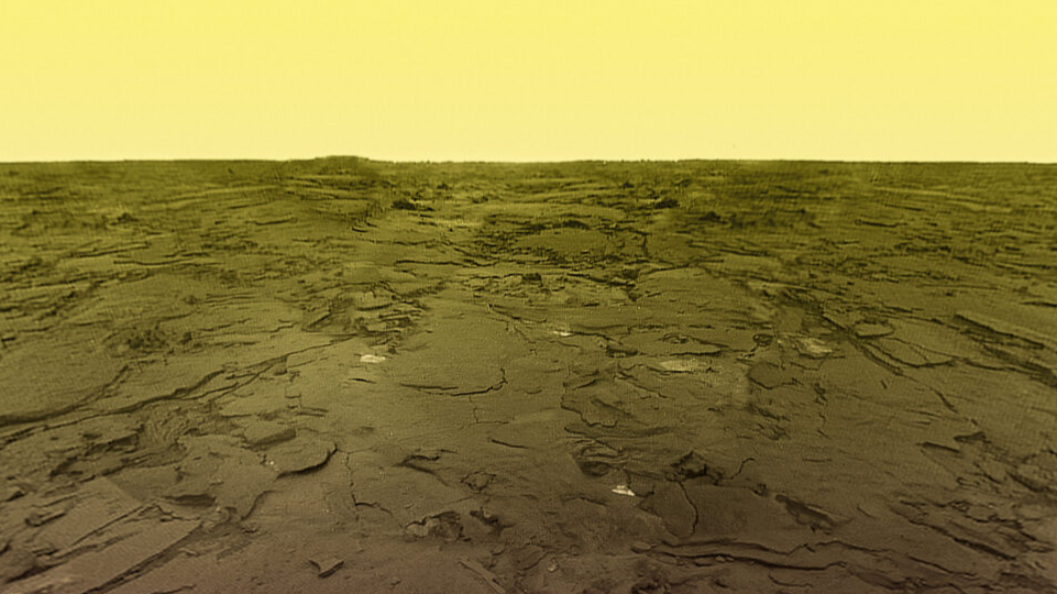
Every 100 units, one specialist carries the real optics: 20 MP narrow-field camera, scanning LIDAR, multispectral imager (visible + NIR + thermal), and inertial navigation. Below 45 km the atmosphere is clear - direct visual to the surface. Meter-scale resolution from 35-40 km altitude. Magellan's orbital radar managed 120 meters through the clouds. This is factually a hundred times better.
Navigation beacons on every mapping unit provide GPS-equivalent positioning for the fleet. No orbital infrastructure required. Surface mapping for settlers - location planning and some resource mapping included.
4. Acoustic and Seismic Array (87 kg)
Venus's dense atmosphere is an extraordinary acoustic medium. Sound propagates efficiently in 50+ bar CO₂. The planet likely has active volcanism. We've never listened to her.
Five pressure transducers spaced along a 15-km tether at 55, 50, 45, 40, and 35 km. Broadband infrasound detection - seismic events couple into the atmosphere as pressure waves. Five altitude points allow wavefront timing for source localization.
Venusquake detection. Volcanic eruption signatures. Atmospheric dynamics - convective cells, gravity waves, tides. Thunder characterization. The first long-duration seismological survey of Venus without touching the surface.
5. Lightning and Power Station (283 kg)
Venus has evidence of atmospheric electrical activity. A 12-km conductive carbon fiber tether with titanium collection electrodes at five altitudes acts as a vertical antenna in the planet's electrical field. Charge routes to lithium-sulfur batteries - sulfur sourced from Venus's own acid cracking. To the learned this = 40 kWh storage.
The key feature: wireless induction sharing. A 1-meter coil on top transfers 500 W continuously to drones landing on the pad or to neighboring aerostats within 1-2 m. Every unit carries a receiving coil as standard equipment.
Lightning specialists: 1 per 500-1,000 units. General Power Stations (thermal gradient + wind shear + induction pad): 1 per 100. By Phase 4, the passive energy portfolio - thermal gradient, wind shear, lightning, solar - handles baseline loads. Nuclear stays for manufacturing, crew life support, and emergencies. The planet itself powers the fleet.
6. Atmospheric Distillation Column (300 kg)
The tether IS a distillation column. A 20-km PEEK cable with six collection traps at different altitudes. Each trap condenses or adsorbs compounds specific to its temperature and pressure band:
- 65 km (-10°C): SO₂, CO, noble gases (Ar, Ne, Kr, Xe)
- 58 km (15°C): Water vapor, dilute H₂SO₄
- 50 km (75°C): Dense cloud-layer acid, HCl/HF traces
- 45 km (110°C): Thermal decomposition fragments
- 40 km (143°C): High-pressure gas sampling
- 35 km (190°C): Deep atmosphere chemistry
Traps winch up periodically for analysis by an onboard mass spectrometer and gas chromatograph. Noble gases for electronics. HCl for chemical processing. And the most important measurement of all: atmospheric composition changes over time - the direct scorecard of terraforming progress.
7. Wind Shear Generator (75 kg)
Venus's super-rotation varies with altitude. A 2-meter parachute-like drag surface at 45-48 km experiences 10-15 m/s differential wind against the host aerostat at 53-56 km. The tension on a 5-8 km tether drives an electromagnetic generator.
50-200 W continuous. A parachute on a string with a generator. Simple. Free. Permanent. Five units per 100 aerostats: 250-1,000 W continuous.
8. Surface Science Probe (20-600 kg)
The main event. A 0.4-meter Titanium sphere with ceramic thermal insulation, carrying eight instruments: visual camera, multispectral imager, radio spectrometer, atmospheric sensors, LIBS laser spectrometer (fires at the surface, reads mineral composition), particulate counter, gas chromatograph, and microphone.
3-hour descent profile from 55 km to surface - continuous data at every altitude. Cloud chemistry at 50 km. Clear-air imagery at 45 km. Deep atmosphere trace gases at 35 km. Surface contact at 0 km: 462°C, 92 bar. LIBS fires. Camera records. 30-60 minutes of surface science before thermal failure.
Two variants: tethered (PEEK cable to 30 km, 600 kg total, recoverable, permanent station) and free-fall (21 kg, expendable, one per month, parachute descent with RF data uplink). Mix both. Tethered probes for long-duration sub-cloud stations. Free-fall probes for cheap, repeated surface touches.
9. Comms and Power Relay (310 kg)
A 4-meter helium balloon tethered 10-15 km ABOVE the host aerostat positions a high-gain antenna at 65-70 km above the cloud deck with clear line-of-sight to orbital assets. X-band uplink at 1 Mbps. Aggregates data from 50-100 aerostats in mesh range.
Below: 60 kWh lithium-sulfur battery bank - largest in the fleet. Multi-port docking ring with structural, gas, liquid, and power connections. Drones dock here to recharge. Robots dock for reprogramming and parts. Crew EVAs use it as waypoint and emergency shelter. 2 per 100 units in Phase 2. Then 6 per 100 in Phase 4.
10. Life Science Platform (115 kg)
Six independent culture chambers, each running a different selection experiment under controlled Venus-analog conditions - adjustable temperature, atmospheric composition, pressure, and light spectrum:
- Azolla under Venus solar spectrum + elevated H₂SO₄ vapor
- Azolla at higher temperature (pushing thermal limits)
- Anabaena isolated - nitrogen fixation optimization
- Chlorella under high CO₂ + low water activity
- Mixed co-evolution (Azolla + Anabaena + Chlorella)
- Wild card - new organisms or Venus atmospheric condensate culture
Robotic sample handler manages feeding, dilution, and harvesting without breaking containment. Microscope, spectrophotometer, gas analyzer, and -80°C sample freezer for Earth return.
The math on directed evolution: Azolla generation time is 2-5 days. In one year: 75-180 generations. Belyaev's fox domestication showed dramatic physiological change in 10-15 generations. Azolla achieves that in 30-75 days. For bacteria (Anabaena, Chlorella), generation time is 4-24 hours. One year: 365-2,190 generations.
This platform doesn't hope organisms tolerate Venus. It manufactures Venus organisms from Earth biology and induces Venus terraforming at will.
11. Intermediary 3-D Printed Drone Fleet (varying small masses)
The fleet that builds itself a nervous system.
PEEK-CF is 3D printable at 410°C nozzle temperature (INTAMSYS FUNMAT HT, commercially available today). The Bosch reaction produces solid carbon - carbon fiber feedstock. Sulfuric acid cracking produces sulfur - lithium-sulfur battery feedstock. The fleet already manufactures both materials as byproducts of other processes.
So print the drones on Venus.
Three classes:
Courier (1-3 kg): Single-rotor or quad-rotor. One GCI cartridge or one LBI-1 bottle per flight. 20-minute endurance. Printed in under 4 hours on a standard PEEK-CF printer. The disposable logistics unit - if one fails, print another tomorrow. Swarm behavior: 10-20 couriers per Water Producer or Acid Cracker, running continuous delivery loops to neighboring bioreactors. No programming beyond "fill, fly to beacon, deliver, return, recharge."
Inspector (3-8 kg): Quad-rotor with gimbal camera and basic manipulator arm. Flies to a neighboring aerostat, visually inspects envelope seams, tether attachments, valve seats, connector ports. Reports damage. For minor repairs - reseating a GCI cartridge, clearing a blocked intake valve, replacing a sensor - the manipulator arm handles it on-site. Eliminates the need for a crew EVA or a full maintenance robot for 80% of routine inspection tasks. One inspector per 20 aerostats.
Surveyor (8-20 kg): Fixed-wing or hybrid VTOL. Extended range - 10-50 km radius. Carries atmospheric sampling equipment, a lightweight gas chromatograph, or a camera package for mapping runs between aerostat clusters. Can descend 5-10 km below the fleet altitude for sub-cloud reconnaissance without risking a full aerostat. Expendable if it goes too deep - the printer makes another one. Printed in 8-12 hours. One surveyor per 50 aerostats.
Print station requirements:
- Phase 2: One Manufacturing Specialist per 100 units carries a PEEK-CF printer (300°C heated bed, 410°C nozzle, 200×200×200 mm build volume). Prints couriers and inspectors. ~30 kg printer mass.
- Phase 3: Cluster manufacturing nodes with larger build volumes (400×400×400 mm). Prints surveyors. Carbon fiber filament extruded on-site from Bosch carbon + imported PEEK pellets.
- Phase 4: Sovereign manufacturing bays produce full drone inventories. PEEK feedstock partially synthesized from Venus atmospheric carbon and imported precursors. Battery cells assembled from Venus-sourced sulfur and imported lithium.
Power: All classes recharge via wireless induction at any Power Station pad. Couriers: 15-minute charge for 20-minute flight. Inspectors: 30-minute charge for 45-minute sortie. Surveyors: 2-hour charge for 3-hour mission.
The point: Every other sub-mission device on this list is a fixed installation - tethered, stationary, doing one job. The drone fleet is the connective tissue. It moves products between specialists, inspects hardware nobody can reach, samples atmosphere nobody wants to risk an aerostat in, and maps terrain between clusters. And when one breaks, the fleet prints its replacement from materials Venus provided.
The Fleet doesn't just float. It flies between itself. It looks and feels like a living organism.
Citations
Venus Atmospheric Environment (referenced across all devices)
Seiff, A. et al. (1985). "Models of the Structure of the Atmosphere of Venus from the Surface to 100 Kilometers Altitude." Advances in Space Research, 5(11), 3-58. — Temperature, pressure, and density profiles by altitude. The source for every altitude-specific condition cited in the article.
Taylor, F.W. & Grinspoon, D.H. (2007). "Venus: Atmosphere." In Encyclopedia of the Solar System, 2nd ed., Academic Press. — Venus atmospheric composition: 96.5% CO₂, 3.5% N₂, trace gases (SO₂, HCl, HF, CO, noble gases).
Sagdeev, R.Z. et al. (1986). "Overview of VEGA Venus Balloon in situ Meteorological Measurements." Science, 231(4744), 1411-1414. — PTFE balloon flight heritage on Venus. VEGA 1 and 2 operated at ~54 km altitude for 46+ hours in 1985.
Device 1: Sulfuric Acid Cracker
Krasnopolsky, V.A. (2007). "Chemical Kinetic Model for the Lower Atmosphere of Venus." Icarus, 191(1), 25-37. — H₂SO₄ thermal decomposition chemistry in Venus atmosphere. Decomposition occurs naturally below ~40 km.
Müller, T. (2003). "Sulfuric Acid Decomposition." In Ullmann's Encyclopedia of Industrial Chemistry. Wiley-VCH. — Iron oxide and vanadium pentoxide catalysis for H₂SO₄ → H₂O + SO₃ at 300-400°C. Standard terrestrial industrial process.
Device 2: Thermal Gradient Generator
Landis, G.A. (2003). "Colonization of Venus." AIP Conference Proceedings, 654, 1193-1200. — Venus cloud-level habitability analysis. Temperature and pressure conditions at 50-55 km altitude establishing the habitable zone that anchors the thermal gradient's cold side.
Device 3: Imaging and Navigation
Ford, P.G. & Pettengill, G.H. (1992). "Venus Topography and Kilometer-Scale Slopes." Journal of Geophysical Research, 97(E8), 13103-13114. — Magellan synthetic aperture radar resolution (~100 m). The baseline that sub-cloud optical imaging at 35-40 km improves by two orders of magnitude.
Device 4: Acoustic and Seismic Array
Smrekar, S.E. et al. (2010). "Recent Hotspot Volcanism on Venus from VIRTIS Emissivity Data." Science, 328(5978), 605-608. — Evidence for recent volcanic activity on Venus from thermal emissivity anomalies. The geological activity that acoustic arrays would detect.
Garcés, M.A. (2013). "On Infrasound Standards, Part 1: Time, Frequency, and Energy Scaling." InfraMatics, 2(2), 13-35. — Infrasound propagation physics relevant to seismic-atmospheric coupling in dense atmospheres.
Device 5: Lightning and Power Station
Russell, C.T., Zhang, T.L., & Wei, H.Y. (2008). "Whistler Mode Waves from Lightning on Venus: Magnetic Control of Ionospheric Access." Journal of Geophysical Research, 113(E5). — Confirmation of Venus atmospheric electrical activity from Venus Express magnetometer data.
Manthiram, A. (2020). "A Reflection on Lithium-Ion Battery Cathode Chemistry." Nature Communications, 11, 1550. — Lithium-sulfur battery chemistry foundations. Venus-sourced sulfur from H₂SO₄ decomposition as in-situ battery feedstock.
Device 6: Atmospheric Distillation Column
Bézard, B. & de Bergh, C. (2007). "Composition of the Atmosphere of Venus below the Clouds." Journal of Geophysical Research, 112(E4). — Sub-cloud atmospheric chemistry by altitude. Noble gas concentrations, trace species profiles — the target compounds for the distillation traps.
Device 8: Surface Science Probe
Maurice, S. et al. (2012). "The ChemCam Instrument Suite on the Mars Science Laboratory (MSL) Rover: Science Objectives and Mast Unit Description." Space Science Reviews, 170(1-4), 95-166. — LIBS (Laser-Induced Breakdown Spectroscopy) flight heritage. ChemCam on Curiosity demonstrates the technique for in-situ mineralogy. Same principle applied to Venus surface contact.
Ekonomov, A.P. et al. (1984). "Scattered UV Solar Radiation within the Clouds of Venus." Nature, 307, 345-347. — Venera lander surface science heritage. Precedent for short-duration surface operations under extreme conditions.
Device 9: Comms and Power Relay
Arney, D. & Jones, C. (2015). "HAVOC: High Altitude Venus Operational Concept." AIAA SPACE 2015 Conference. NASA Langley Research Center. — Venus aerostat communication architecture analysis, including cloud-deck signal attenuation and above-cloud relay requirements.
Device 10: Life Science Platform
Belyaev, D.K. (1979). "Destabilizing Selection as a Factor in Domestication." Journal of Heredity, 70(5), 301-308. — Directed selection producing dramatic physiological change in 10-15 generations. The timescale benchmark for Azolla adaptation (30-75 days for equivalent generations).
Trut, L.N. (1999). "Early Canid Domestication: The Farm-Fox Experiment." American Scientist, 87(2), 160-169. — Extended documentation of the Belyaev program. Morphological, behavioral, and endocrine changes under selection pressure across generations.
Lumpkin, T.A. & Plucknett, D.L. (1980). "Azolla: Botany, Physiology, and Use as a Green Manure." Economic Botany, 34(2), 111-153. — Azolla doubling time (2-5 days), protein content (19-30%), nitrogen fixation via Anabaena symbiosis, cultivation history spanning over a thousand years.
Device 11: 3D-Printed Drone Fleet
INTAMSYS Technology Co. (2024). "FUNMAT HT Enhanced — Industrial PEEK 3D Printing." Product specifications. — PEEK-CF 3D printing at 410°C nozzle temperature, 260°C heated chamber. Build volume and material properties for in-situ manufacturing.
Victrex plc. (2023). "VICTREX PEEK 450G Datasheet." — PEEK continuous working temperature (260°C), sulfuric acid resistance (good to 70% concentration), FDA food contact compliance. Baseline material properties for all PEEK structures in the fleet.
General / Cross-cutting
Brinkhuis, H. et al. (2006). "Episodic Fresh Surface Waters in the Eocene Arctic Ocean." Nature, 441(7093), 606-609. — The Azolla Event. Geological proof of biological planetary climate modification. Foundation for the entire biological deployment argument.
Hecht, M.H. et al. (2021). "Mars Oxygen In-Situ Resource Utilization Experiment (MOXIE)." Space Science Reviews, 217, 9. — CO₂ → CO + O₂ electrolysis demonstrated on Mars. Heritage technology for EVER buoyancy system.
Lee, G. et al. (2025). "EVER: Exploring Venus with Electrolytic Replenishment." 56th Lunar and Planetary Science Conference, Abstract #2187. — In-situ CO₂ electrolysis for Venus balloon buoyancy. CO+O₂ mix (MW 29.3) vs CO₂ (MW 44) providing lift without imported gas.