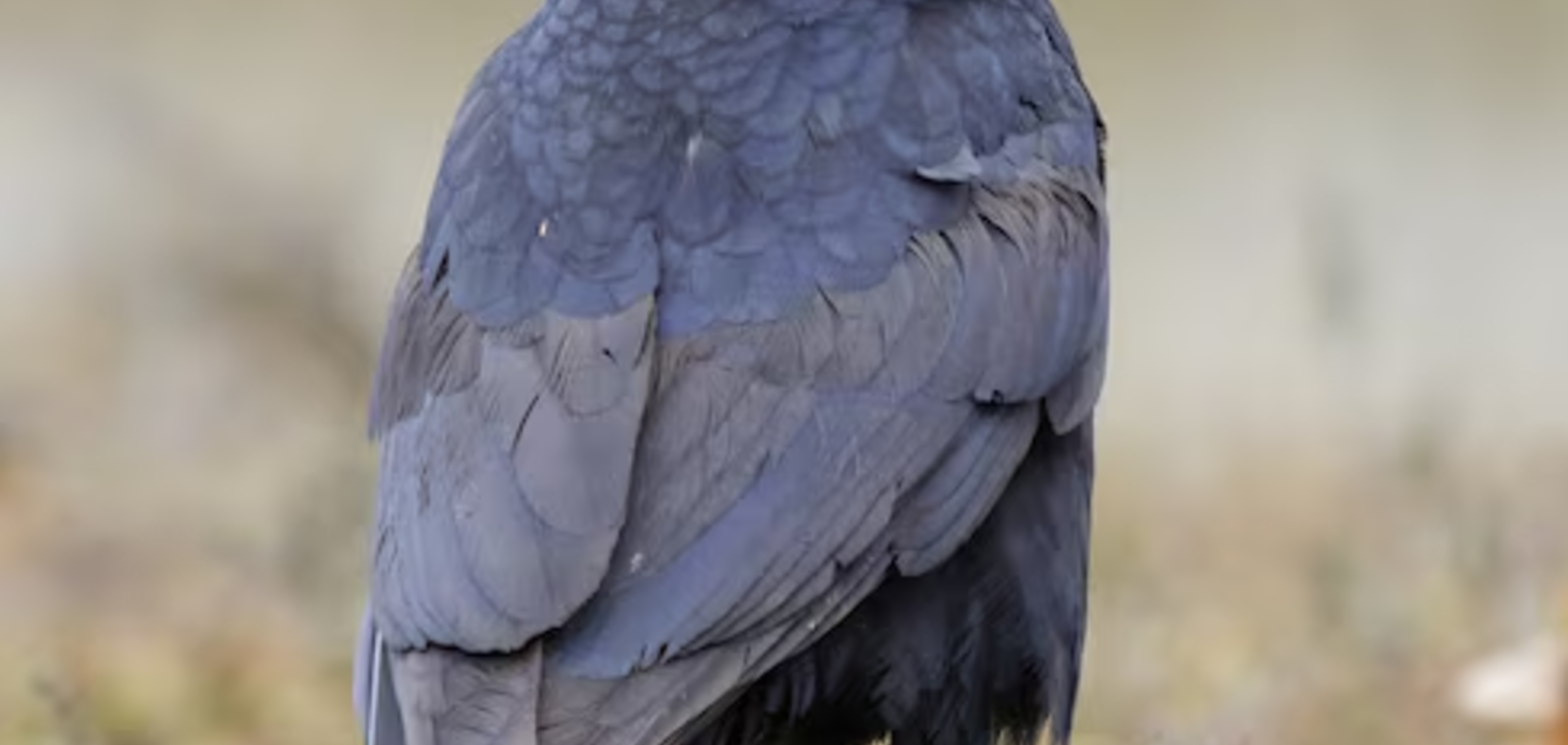
Corvids furnish ape-grade cognition in a bird, and they do it in an animal that is abundant, non-endangered, long-lived, and living in the same cities we do. The New Caledonian crow manufactures hook tools, uses meta-tools, and solves multi-step and water-displacement problems. Ravens plan for future tool-use and barter across delays of up to seventeen hours, a horizon comparable to great apes. Crows recognize individual human faces, hold the association for years, and pass it socially to flockmates and offspring. That last finding is the program's founding thesis caught in the act: a wild population acquiring and transmitting a learned distinction across generations. The corvid track is proposed as the fastest and least-encumbered proving ground in the program, and the first study I would actually field.
The founding thesis of Intelligensicus is that intelligence rises in a population when abundance and stockpiling produce spare time and docility, and with them the room to work problems out. The decisive step comes not from handing animals finished solutions but from scaffolding self-authored capability, so a population improves its own conditions and transmits the gain. The silver-fox domestication experiment shows the shift is fast and heritable within a handful of generations. Robert Sapolsky's savanna baboon troop shows a wild population can adopt and hold a culture, transmitted to newcomers years after the original members are gone. The New York Declaration on Animal Consciousness affirms a realistic possibility of conscious experience across vertebrates and many invertebrates.
The significance particular to this track is that the city already runs the program's founding condition set. Urban corvids exploit reliable, calorie-dense, human-associated food, and under that abundance they innovate: dropping walnuts into a crosswalk for passing cars to crack and retrieving them when traffic stops, baiting fish with scraps, fashioning a hooked tool to draw out prey. These are exactly the behaviors that abundance and spare time are expected to produce. The same pattern is reported across urban commensals more broadly, where city squirrels, rats, and mice run bolder, better-fed, and more behaviorally flexible than their rural counterparts. The city is therefore a naturally occurring instance of the program's thesis, available to be studied and harnessed rather than only constructed, and this observation is cross-referenced to the urban-rodent work of the domestic-lineage track.
1. Can corvid tool and planning cognition be elicited, measured, and enriched under aviary and boxed rigs?
2. Does the naturally occurring abundance of the urban environment operate as an existing uplift condition?
3. Will scaffolded skills, introduced past the birds' neophobia, transmit to untrained flockmates and to next-generation birds?
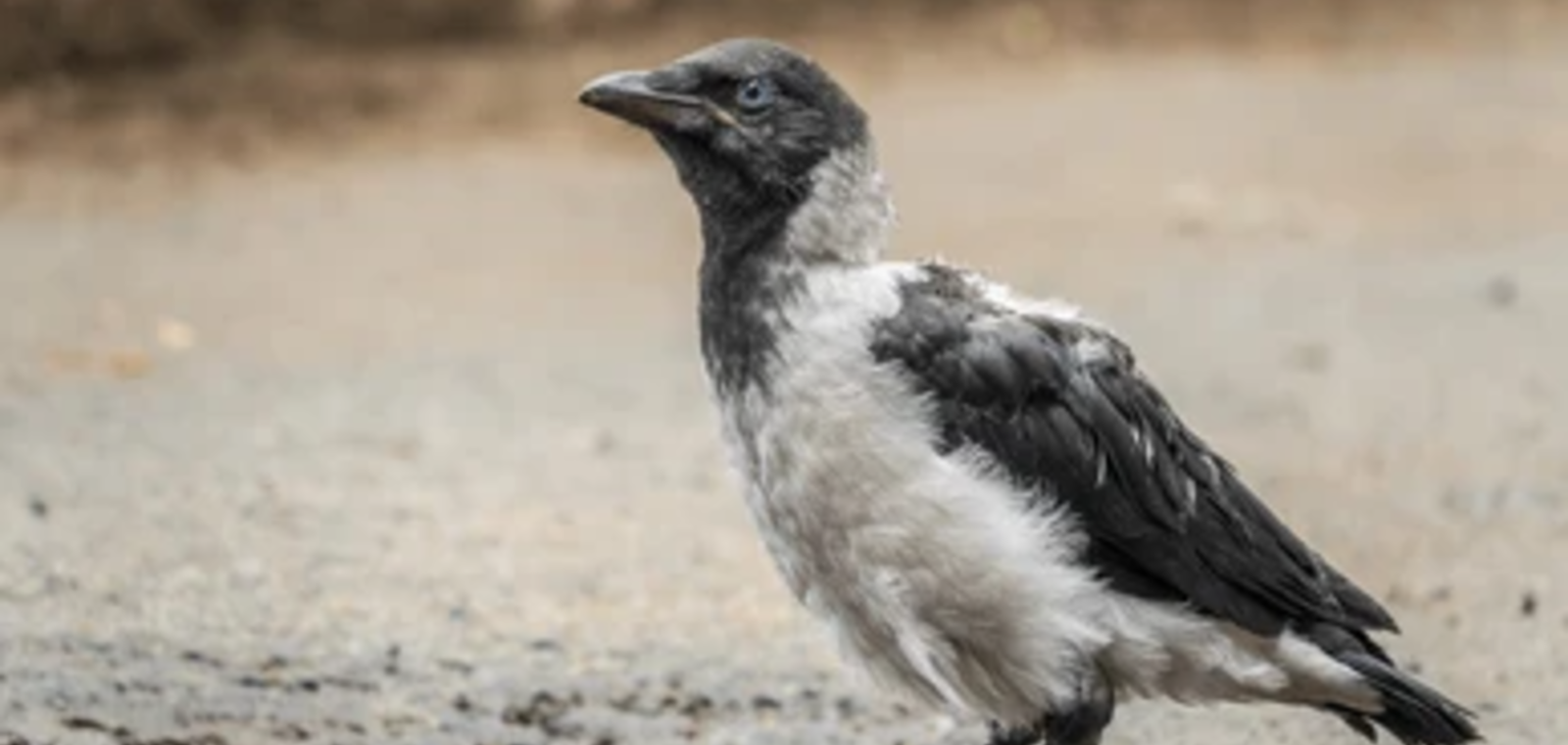
To quantify and enrich corvid tool and planning cognition under boxed rigs, and to characterize urban abundance as a naturally occurring uplift condition and test whether scaffolded capability transmits and persists through resident city flocks. The two aims are related but not interdependent: the aviary cognition of the first stands whether or not urban field transmission obtains.
The track runs in two modes. In the aviary and boxed mode, tool-manufacture and tool-use puzzles, multi-step and water-displacement problems, caching and memory tasks, and self-control and planning tasks are run with New Caledonian crows, ravens, and jays under short, enriching, catch-and-release or aviary-cohort conditions. In the field mode, tasks and tools are introduced patiently, past neophobia, at provisioning stations near a resident urban flock; because crows teach their young and transmit socially, a scaffolded improvement can be tracked as it spreads flock-to-flock and parent-to-offspring. Reliable provisioning near study flocks is itself an experimental variable: it supplies the abundance-and-spare-time condition and builds the trust that prevents the documented grudge failure mode. Method rule, as across the program: scaffold rather than provide, giving better materials and staged problems so the bird invents or improves the solution.
Capability is assessed on the birds' own terms. The study tracks whether a scaffolded behavior spreads and persists across the flock and into the next generation, with social transmission the central channel. Urban abundance is treated as a measured baseline condition against which scaffolded interventions are compared, so naturally occurring city gains are distinguished from the program's own scaffolding.
Corvids are abundant, non-endangered, and urban-adjacent, which makes this the least legally and logistically encumbered of the field studies. Native corvids are protected under migratory-bird law, so field and box work requires the relevant research permits, but that burden is far lighter than the marine-mammal or near-person authorizations the other tracks carry. Resident urban crow and raven flocks are available in nearly any city, and the aviary cognition literature supplies a ready measurement frame. This is the track that can produce acquisition and transmission data soonest and at the lowest cost.
Non-endangered native birds handled under research permit, with welfare-first, catch-and-release or aviary-cohort protocols. The grudge failure mode is a design constraint as much as a proof: corvids recognize individuals and transmit grudges, so mishandling could teach a wild flock to fear the outposts. Trust-building provisioning and careful handling treat the face-recognition finding as a rule to design around.
The corvid track carries the lightest permit burden in the program, which is central to its case as the lead application. Native corvids are protected under migratory-bird law, so the work runs under the standard scientific-collecting and research permits for native birds rather than the heavy regimes the marine and near-person tracks require. There is no marine-mammal take authorization, no vessel or coastal-development permitting, and no near-person sanctuary review. The scoped permit set is: a federal migratory-bird scientific-collecting or special-purpose permit for the native corvids in scope; the corresponding state wildlife research permit; institutional animal-care and welfare review on the standard model, applying the 3Rs (Russell and Burch, 1959); and, for any listed or cross-border species, the ordinary endangered-species and international-trade checks, which for common crows, ravens, and jays do not typically apply. Aviary and provisioning work near an urban flock adds only routine local siting clearance. This is a permit profile a single host can clear on a short timeline, unlike the multi-agency marine or sanctuary pathways.
The corvid outpost is the cheapest unit in the program. It needs no research vessel and no marine-grade enclosure; its rig is an aviary or a set of boxed puzzle apparatus plus provisioning stations, all fabricated as repeatable molded units so the marginal build falls with volume. The dominant recurring line is cohort labor, not capital: a small team of graduate and undergraduate field workers running the boxed and field protocols, with instrumentation for continuous behavioral and transmission monitoring. A fully loaded corvid outpost-year, covering rig amortization, cohort labor, instrumentation, permitting, and travel, is modeled at an order-of-magnitude $120,000 to $250,000 per outpost per year in the early production run, below the program-wide blended figure because the vessel and marine-permitting lines are absent. The rig marginal build is on the order of a few thousand dollars per aviary or box set once molded.
Read on the outpost scaling ladder, holding these unit economics constant:
| N = 1 outpost | one city, one resident flock | order $120K-$250K / year |
(the fundable lead pilot)
| N = 10 outposts | one corvid species saturated | order $1.2M-$2.5M / year |
across a metropolitan range
| N = 100 outposts | corvids fielded across many | order $12M-$25M / year |
cities and several species
| N = 1,000 outposts | continental urban-corvid network | order $120M-$250M / year |
(mold economics dominant)
| N = 5,000 outposts | approaching range saturation | order $600M-$1.25B / year |
| N = 10,000 outposts | the serial, unbounded endpoint | order $1.2B-$2.5B / year |
(run continuously and indefinitely -- "times by infinity")
Because the track is run as a serial catch-and-release and aviary-cohort operation, each rung is an annual operating figure for a standing network, not a one-time build. The N = 1 rung is what a first funder or host actually underwrites; the upper rungs express the saturation-scale reach the master proposal carries for the program as a whole.
No institutional adoption is assumed and every method is specified in institution-agnostic terms. Within the program's two-layer structure, the master proposal carries the full vision and each track can front an application on its own. The corvid track is the natural lead application: it is the cheapest and fastest study to bring into operation, it is governed by migratory-bird research permitting rather than the marine-mammal or near-person regimes, its subjects are available in any city, and it is built to produce acquisition-and-transmission data on the shortest timeline. A funder or host can back this one track as a bounded, self-contained project, with the master proposal supplied as vision context, and expand into the remaining tracks once the corvid study returns results. This is the founder-fund-it-yourself-if-needed track, sized to be stood up by patient or impact capital, or by a single motivated host, without waiting on a whole-program center commitment.
This is a proposed research program. The dual box-and-field design and the treatment of urban abundance as a naturally occurring uplift condition are the current, reasoned direction of the Principal Investigator, to be refined against field results once in operation.
Kabadayi, C., and Osvath, M. (2017). Ravens parallel great apes in flexible planning for tool-use and bartering. Science. Marzluff, J. M., et al. (2012). Brain imaging reveals neuronal circuitry underlying the crow's perception of human faces. PNAS. Sapolsky, R. M., Share, L. J. (2004). A pacific culture among wild baboons. PLoS Biology. The New York Declaration on Animal Consciousness (2024).
Companion studies: STUDY 4 (great apes); STUDY 6 (elephants); STUDY 7 (domestic-lineage, urban rodent cross-reference).