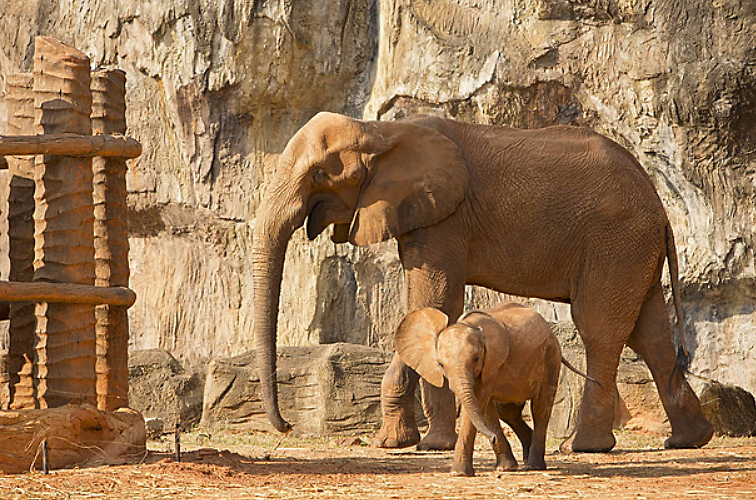
Elephants run as field study, grouped by the seed with the great apes. They pass a mirror mark test, use tools such as branch fly-swats and waterhole plugs, grieve, and hold matriarch ecological knowledge that raises a group's survival through drought. That matriarch knowledge, transmitted down the group, is the founding thesis made literal. The elephant is a standalone track because its transmission structure inverts the operational target used elsewhere: the unit that holds and transmits capability is not the individual but the matriarch, so the objective is to protect and amplify the matriarch line rather than to task-train individuals.
The founding thesis of Intelligensicus is that intelligence rises in a population when abundance and stockpiling produce spare time and docility, and with them the room to work problems out. The decisive step comes not from handing animals finished solutions but from scaffolding self-authored capability, so a population improves its own conditions and transmits the gain. The silver-fox domestication experiment shows the shift is fast and heritable within a handful of generations. Robert Sapolsky's savanna baboon troop shows a wild population can adopt and hold a culture, transmitted to newcomers years after the original members are gone. The New York Declaration on Animal Consciousness affirms a realistic possibility of conscious experience across vertebrates and many invertebrates.
1. Can a wild elephant group improve a tool or water and foraging behavior it already uses?
2. Can matriarch-held ecological knowledge be protected and amplified so it transmits and raises survival?
3. Can uplift be aimed at skills that reduce, rather than increase, human-elephant conflict?
To demonstrate scaffolded capability and to protect and amplify matriarch knowledge transmission in a wild population, with conflict-reducing skills as a headline target, uplift and conservation as one effort.
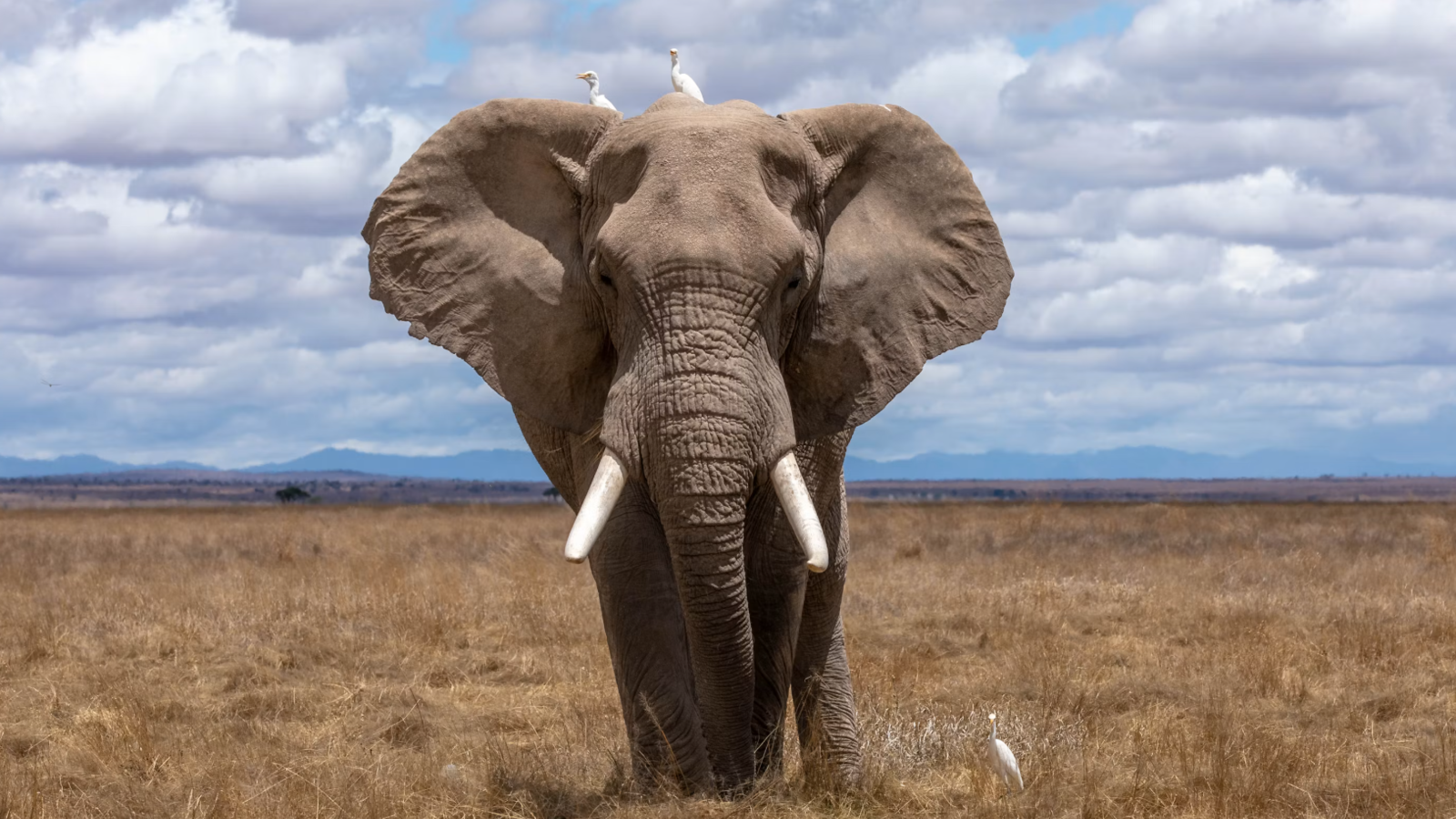
Field research with wild family groups plus an ethical-sanctuary and captive method-ground, used only where welfare is sound. Interventions scaffold better versions of existing tool, water-management, and foraging behaviors and reinforce matriarch route and resource knowledge. Asian elephants offer a tractable method-ground; a stable African savanna population offers the wild matriarch-transmission system.
Capability is assessed on the group's terms; the program tracks whether a behavior or knowledge spreads and persists across the family and generations, with matriarch transmission the central channel. Because the operational target is the matriarch line, individual and matriline identification is the measurement that matters most, and it is exactly the burden that machine vision now lightens: photo-identification of elephants by ear and body morphology is increasingly automated, so matriline continuity can be tracked continuously and across the multi-year windows this track requires rather than reconstructed from sparse human observation.
Well-studied savanna populations with existing matriarch-knowledge research, and ethical Asian-elephant sanctuaries, provide ready field and method sites.
Endangered near-persons; the African forest elephant is critically endangered. Non-invasive, net-positive-for-population, human-conflict coordination, and only ethical sanctuary and mahout partnerships as the method-ground.
The elephant track carries the program's heaviest conservation-listing burden, because every species in scope is protected and the African forest elephant is critically endangered. Wild field work requires the host nation's wildlife-research and protected-area permits, Endangered Species Act consultation, and CITES international-trade clearances throughout. The method-ground is restricted by design to ethical sanctuaries and established mahout partnerships, which brings sanctuary and near-person welfare review; institutional animal-care review applies under the 3Rs (Russell and Burch, 1959). Because the operational target is the matriarch line rather than individual task-training, human-elephant-conflict coordination with local authorities and communities is a standing permit-adjacent obligation, not an optional courtesy. No new captures are sought.
The elephant outpost is a field-station unit built around a stable wild population plus an ethical-sanctuary or mahout method-ground. Its cost is driven by the field season, the cohort, and the conservation-partnership overhead, not by ship time or marine fabrication. The dominant lines are the land base near a habituated savanna population and at the sanctuary method-ground, the graduate and undergraduate cohort running matriline observation and scaffolding, photo-identification and matriline-tracking instrumentation, travel and per diem across international sites, and the heavy endangered-species permitting and conflict-coordination overhead above. A fully loaded elephant outpost-year is modeled at an order-of-magnitude $500,000 to $1,200,000 per outpost per year in the early production run, among the more expensive land tracks because of the dual wild-plus-sanctuary method-ground, the critically-endangered-species permitting, and the conservation-partnership burden.
Read on the outpost scaling ladder, holding these unit economics constant:
| N = 1 outpost | one wild population plus its | order $500K-$1.2M / year |
sanctuary method-ground
| N = 10 outposts | one region's populations followed | order $5M-$12M / year |
with matriline transmission tracked
| N = 100 outposts | multi-region elephant network | order $50M-$120M / year |
(African and Asian, wild and sanctuary)
| N = 1,000 outposts | range-wide elephant program | order $500M-$1.2B / year |
| N = 5,000 outposts | approaching range saturation | order $2.5B-$6B / year |
| N = 10,000 outposts | the serial, unbounded endpoint | order $5B-$12B / year |
(run continuously and indefinitely -- "times by infinity")
Because the unit that holds and transmits capability is the matriarch line, the elephant ladder scales by populations protected and matrilines amplified rather than by individuals trained. The N = 1 rung is a fundable single-population program on its own.
Year 1: sanctuary method development plus welfare, conservation, and permit frame. Year 2: a stable savanna population and first scaffolding. Year 3 onward: transmission monitoring and expansion.
This is a proposed research program. The matriarch-line operational target and the dual wild-plus-sanctuary method-ground are the current, reasoned direction of the Principal Investigator, to be refined against field results once the program is in operation.
Breuer, T., et al. (2005). First observation of tool use in wild gorillas. PLoS Biology. Sapolsky, R. M., Share, L. J. (2004). A pacific culture among wild baboons. PLoS Biology. Whiten, A., et al. (1999). Cultures in chimpanzees. Nature. The New York Declaration on Animal Consciousness (2024).