This program is the work of a single originator, and it is presented as one complete, integrated system, not a set of parts to be taken piecemeal. The value is in the whole, and in the mind that can hold and carry the whole. A complex idea is easy to copy at the surface and impossible to copy at the depth. The imitator takes the fragment, files the paper, and calls the field his own, and the deeper version dies with the person who was never funded to build it. This is the older pattern in a new coat. The one who produces real value through actual adversity, and who lacks the documentation to fence it, is the ripest thing in the system to harvest and the least likely to be backed. The machine does not punish laziness and reward merit. It rewards documented merit and farms the rest. Capital that backs the documented copy over the undocumented origin is one reason the hardest problems stay unsolved, because the deep version keeps getting buried before it is built. Intelligensicus asks to be funded at its origin, in full, so that the version that gets built is the whole one.
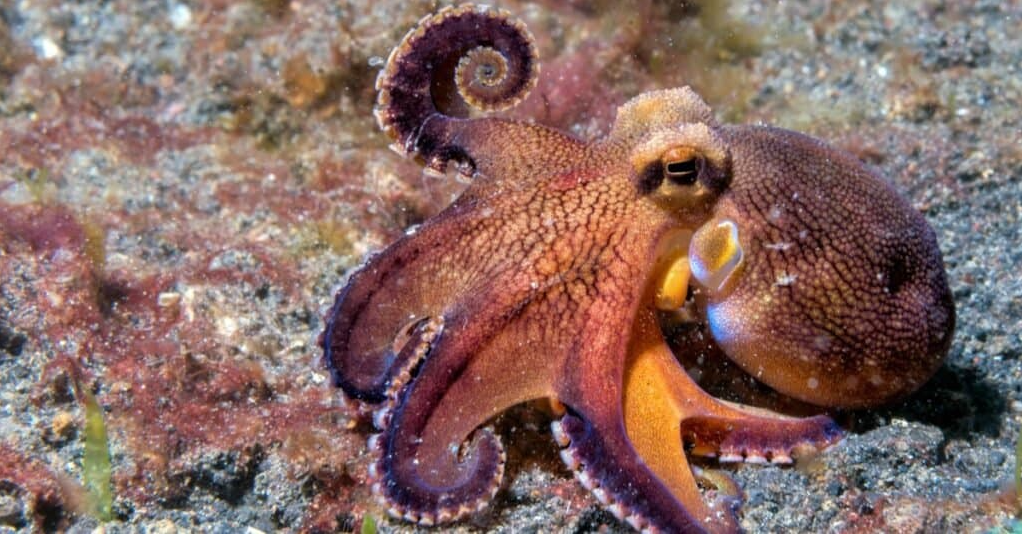
Intelligensicus is a research program to raise the intelligence, well-being, and survival of wild animal populations, and to have those populations carry the gain forward through their own cultural transmission across generations. The program begins in the sea, with the octopus, and advances through eight further tracks. Because every intervention targets skills that improve survival and reduce conflict with people, the work is a conservation program as well as an intelligence program. We are seeking patient capital to fund a first, deliberately low-cost phase that establishes the method and demonstrates transmission in a wild population.
No organization has yet made a structured attempt to raise the intelligence of wild populations and to measure whether the gain is held and transmitted. The scientific foundation now exists to do so. The result, if the method holds, is a lasting increase in the capability and resilience of the species involved, and a new and durable contribution to conservation. The intended outcome is not a market position. It is more capable life in the wild, and healthier populations that need less human intervention over time.
Intelligence rises in a population when it gains abundance, and with it the time and stability to work problems out. The method is scaffolding. The program helps an animal author a better version of a behavior it already performs, so the improvement is its own to keep and to teach. A wild octopus, guided into a clear enclosure sited in its own water, works through a task of levers and mechanical puzzles, earns a natural reward, and is released. The enclosures are engineered as habitat, so each installation improves the water it occupies. The same principle runs across insects, corvids, dolphins, apes, elephants, bears, and the wild and domestic forms of the fox, dog, cat, and rodent.
The program rests on established findings. The silver-fox domestication studies demonstrate that behavioral change can be heritable within a small number of generations. Robert Sapolsky's savanna baboon research documents a wild troop adopting and maintaining a distinct culture, transmitted to animals that joined years after the change began. Wild dolphins pass tool-based foraging down the maternal line as a durable tradition. Cephalopods, corvids, and other subjects demonstrate the problem-solving and social-learning capacities the program depends on. A companion bibliography accompanies this proposal.
The program is structured to establish proof before committing significant capital. The opening phase concentrates on the most accessible and least regulated tracks: corvids, the domestic-lineage species, and near-shore marine work. These prove the full method, from conditioning through scaffolding to transmission and persistence, before any funding is directed to the more costly marine-mammal, primate, or elephant fieldwork. Enclosure fabrication uses repeatable molds, so unit cost declines with volume, mirroring the economics of the marine manufacturing industry. Graduate and undergraduate research cohorts provide scalable field capacity while developing the program's future workforce. Each phase advances only on demonstrated transmission, which keeps capital tied to results rather than to schedule.
This proposal is written for funds that support pre-revenue, long-horizon, mission-first work. Intelligensicus sits in the space between conventional venture investment and project finance, alongside conservation and scientific philanthropy. Prime Coalition places catalytic capital in precisely that gap. Pale Blue Dot publishes its investment thesis in full, and this program can be assessed directly against it. Breakthrough Energy Ventures makes long-duration commitments to difficult problems. Contrarian Ventures and Climentum Capital invest at the early stage in European climate and hard technology. The program is presented to each on the terms it states publicly.
We are seeking seed funding for the first phase: the corvid, domestic-lineage, and near-shore marine pilots, carried to the point where transmission in a wild population is demonstrated and documented. The phase is dominated by research-cohort and fabrication costs rather than by vessels and permits, which makes it an efficient and well-bounded way to establish the program's central claim before it scales.
Imran Stanton Cooper. Intelligensicus program library, imran.theamanuensis.com/intelligensicus-library. A first conversation, and the full master proposal and per-track proposals, are available on request.
More capable life in the wild, holding knowledge of its own making.