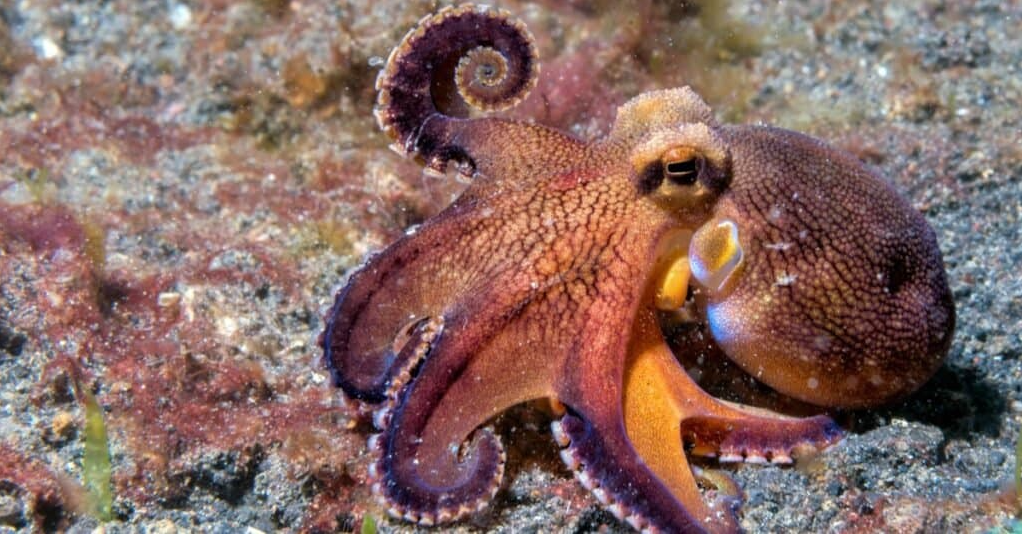
The Marine Box Track is the flagship program of Intelligensicus, a research effort whose single objective is to raise the intelligence, well-being, and survival of wild animal populations and let those populations keep the gain across their own generations. Here the subject is the ocean's most surprising mind: the octopus, together with the cuttlefish and a set of coastal fishes. The method is a humane, stationary, clear enclosure sited in the animal's own water. A wild octopus is gently guided into a clear box, sees the open sea around it the entire time, solves a task built from the standard maze paradigms of the learning-and-memory literature, plus levers, tools, and puzzle boxes, earns a real reward, and is released. The tasks grade from simple alternation mazes that probe working and reference memory up through radial-arm, Barnes, and cheeseboard mazes that separate egocentric route memory from allocentric map learning, the question being whether the animal builds a cognitive map. The octopus puzzle box is already documented in the literature; Octopus vulgaris solves it for food and shows stable individual differences in how it approaches the problem. Nothing is held longer than the short session requires. Across many task shapes, many builds, and eventually many outposts, the program studies whether a scaffolded capability spreads through the local population and persists. The enclosures are built to improve the water they sit in. The premise is simple, and it has not been tried at scale. Give a wild ocean population the conditions and the scaffolding to raise its own intelligence, and it will.
The octopus is the strongest single argument that intelligence did not need a backbone. The common octopus carries on the order of five hundred million neurons, about a dog's count, and roughly two thirds of them lie in the arms, a distributed cognition with a small brain at every limb. Octopuses use tools, unscrew jars, solve mazes and detours, open latches, and escape enclosures with an inventiveness that reads as insight rather than instinct. The escape is not a curiosity but a documented behavior with a long record: aquarists have reported octopuses leaving their tanks at night, crossing to a neighboring tank to hunt, and returning by morning, from the Brighton aquarium's disappearing lumpfish in the 1870s (Lee, 1875) to the Naples Zoological Station in the 1920s, catalogued in the modern husbandry literature as an animal-welfare concern (Wood and Anderson, 2004). They have individual personalities and learn by watching. And they sleep in an active, dreaming-like stage whose skin patterns flicker as if awake. This is a mind. It is one of the two reasons the Marine Box Track has a paired flagship. The octopus and the cuttlefish lead this track together, not one before the other: the octopus brings manipulation of tools, levers, and mechanical mazes, and the cuttlefish brings the controlled study of choice, delay, and self-control, and running the two side by side is the design.
Two public demonstrations show the exact method this track proposes, though neither has been reviewed by scientific peers and both are offered here as illustration rather than evidence. Marvelous nonetheless if they hold. In the first, an engineer built a nine-part clear underwater obstacle course and set a rescued octopus to work through a revolving door, an over-under, and a land traversal to reach a food vault, the stated aim being to confirm the animal could relearn wild foraging before release. In the second, a musician spent roughly six months training a rescued octopus to operate a custom waterproof instrument for reward, and the shape of that work is the shape of this program: trust and feeding first, then a task built around a behavior the animal already performs, the octopus pulls rather than pushes, then a reward matched to the species, crabs rather than lights, then a staged sequence that shows the animal it is progressing toward a goal. If a hobbyist can carry a single octopus that far, a research program can carry a wild population further.
The cuttlefish adds self-control. In a delay-of-gratification test it will wait, forgoing an immediate meal for a better one, an ability tied to learning performance and long thought to belong only to large-brained vertebrates. Pufferfish add spatial reasoning, individual recognition, and geometric construction, marine and freshwater alike; the male white-spotted puffer's sand nest is a built structure the animal returns to and repairs.
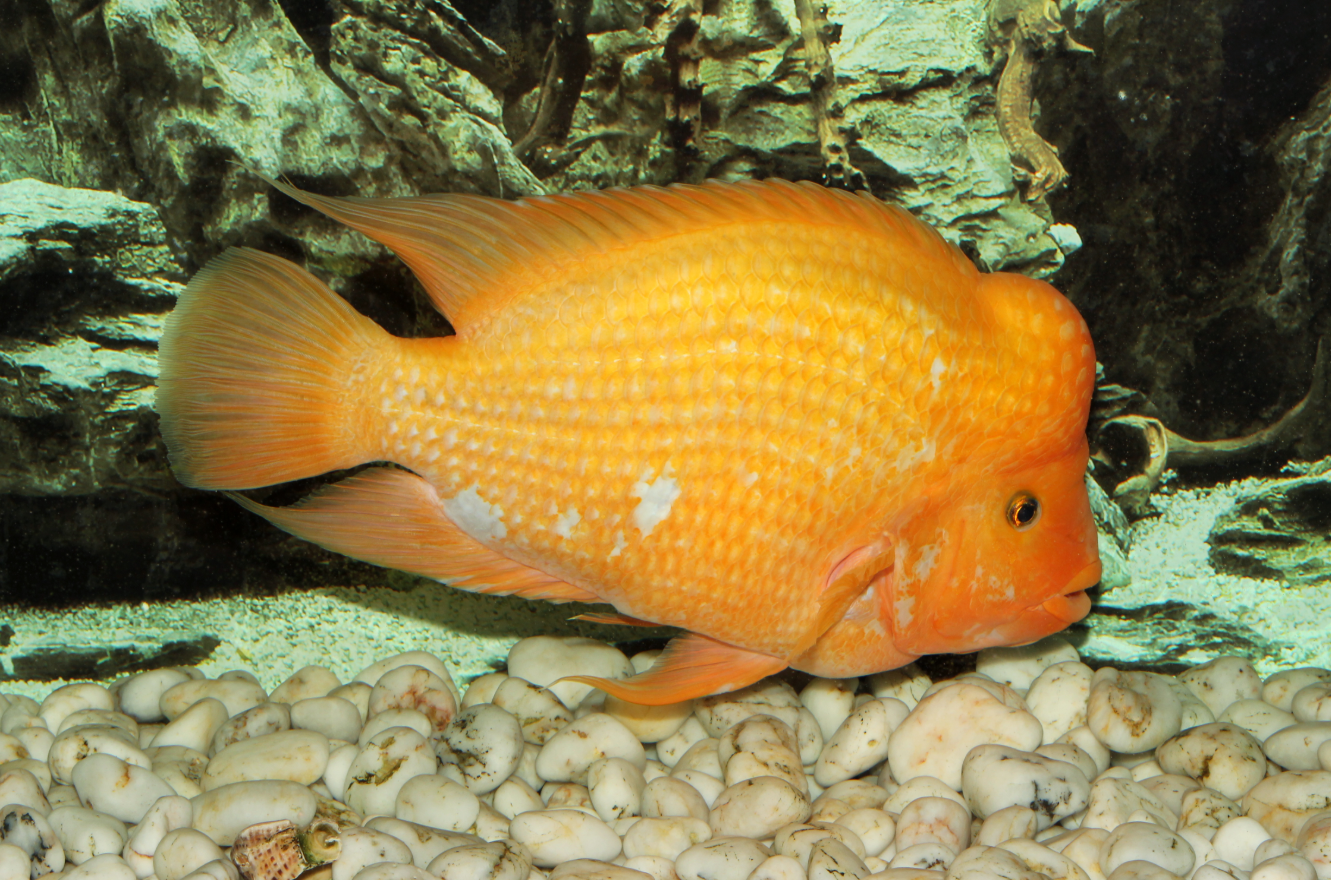
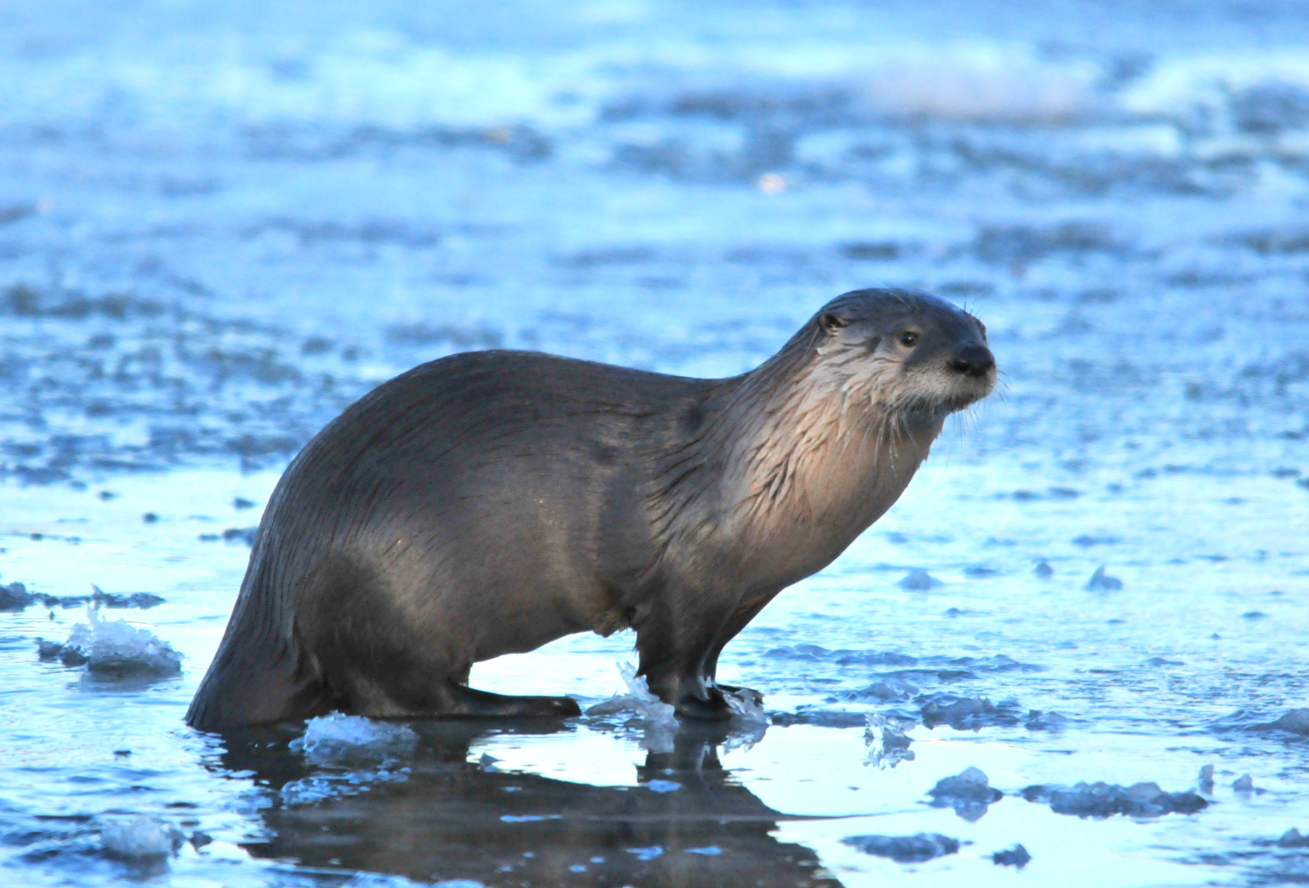
The three flagships are the entry, not the boundary. The cleaner wrasse has passed a mirror mark test, the archerfish learns its aimed water-jet by watching another fish, and the social cichlid is a strong transmission bet in fresh water, and beyond them the inland waterways open the sea otter with its rock hammer-and-anvil tool culture and the beaver with its dams and lodges. The point is not a catalog. The program is open to any capable aquatic mind the method can reach, across marine, brackish, fresh, and inland water; the named subjects are the leaders that make the scope legible, and the outposts scale to whichever ones a given water and a given team can serve.
1. CONDITIONS FIRST. Provide security and a reliable natural reward so the animal has the
room, the spare time, to work a problem rather than merely survive it.
2. SCAFFOLD, DO NOT GIFT. Design tasks that provoke the animal to author a better version
of something it already does, using tools and ideas within its reach. The solution is the animal's own, so it can be kept and, where the species transmits socially, taught.
3. WILD-USEFUL TASKS. Favor capability that pays off in the animal's real environment.
4. TRANSMISSION IS THE GOAL. A single clever octopus is not a result. A local population
that carries a new capability forward is. Every outpost is instrumented to watch for spread and persistence.
The enclosure is a clear, marine-grade acrylic box, produced from repeatable molds so that the cost of each outpost falls with volume rather than being built bespoke. Its submerged surfaces are given the texture and complexity that recruit oysters, mussels, and reef life, so the structure becomes habitat while it runs and leaves the water richer than it found it.
Raise the foraging skill of a cove of octopuses and they may, in time, eat down their own food supply. This is named plainly because the answer is already in hand: modern conservation would simply establish a replenishment or hatchery program nearby, the way managers already handle ordinary ecological consequences. Every intervention is designed with its conservation response, not blind to it, and the tasks favored are those that raise survival and reduce, rather than increase, conflict and depletion.
There is a real and principled objection to intervening in the lives and behavior of wild animals, and this program states it before answering it. A framework exists for weighing such interventions (van Dooren et al., 2023), and a recent analysis of the nearest case, using artificial intelligence to interpret and broadcast to whales, sets out six specific concerns: anthropomorphism, the animals' privacy, cultural and emotional harm, technological solutionism, ineffectiveness for conservation, and projected human bias (the "Dr. Doolittle" analysis, 2024). The precaution is old and consistent: a 1993 proposal to play synthetic calls to wild humpback whales was declined over the ethics of changing a wild population's own calls. The program honors this wall rather than dismissing it.
It also observes that the wall is not the whole picture, and says so in the field's own terms. Conservation is not a fixed creed; its governing values have moved through several phases, and animal welfare is the newest to be incorporated (Lynch, Blumstein, et al.). The discipline already recognizes cases in which the welfare and capability of animals correctly outweigh a preservation reflex, and it has published them under exactly that heading, from the interventionist response to the 2019 to 2020 Australian bushfires to the reconsideration of seal-harvest policy. The position that we may be obligated to intervene in the lives of wild animals, from provisioning in shortage upward, is a named and active school within conservation science, not a fringe.
The honest frame is therefore not that welfare overrides all other values, but that non-intervention is itself a value choice, and one with a measurable record. Around one million species are now threatened with extinction (IPBES, 2019); the current rate runs on the order of a thousand times the natural background (De Vos et al.); more than nine hundred animal extinctions have been documented since 1500, a figure the IUCN calls an underestimate. A doctrine whose defining rule is to hold populations steady, and not to intervene, cannot by its own logic do more than slow that loss. The work of preservation is real, difficult, and valued, and this program does not replace it. It adds the one thing preservation alone was never built to supply: it helps a population become more capable of saving itself from the forces, chiefly people and fire, that actually threaten it. The responsible course is to put that trade-off on the table explicitly, through the structured decision-making the field already recommends, rather than let non-intervention win by default. Read against that record, a welfare-first, survival-targeted, scaffold-not-gift intervention, with its dark side named and answered per track, is not the reckless option. It is the considered one.
Each animal is assessed on its own cognitive architecture, not a human yardstick. Rigs are built to exercise and score specific abilities, problem-solving, memory, self-control, tool handling, navigation, discrimination. Beyond the individual, the program tracks the population: whether a capability spreads and whether it persists across seasons. Spread and persistence in the wild population are the definitive measures of success.
The track runs in a graduate-research posture, cohorts of graduate and undergraduate researchers tending outposts, capturing data, and analyzing transmission. It requires fabricated clear enclosures and their moorings, near-shore vessel access for coastal work and longer voyages for offshore and multi-site effort, instrumentation for continuous monitoring, and the permits and welfare review that placing a structure in coastal water and studying live marine animals demand. The cost strategy is the mold: the first enclosure of a design carries the tooling, and every one after it is cheaper, so the path from one pilot cove to many outposts is a function of production, not of building each by hand.
A clear enclosure moored in coastal water is a structure in a regulated place, and the program treats the ordinary law of the coast as a design constraint, not an afterthought. The likely authorizations, by the actual instruments that govern them, are these. In a state coastal zone, a Coastal Development Permit under the Coastal Zone Management Act and the state coastal program, issued locally through a certified Local Coastal Program or by the state coastal commission on appeal. For placing the structure and its mooring on the bed of navigable water, a federal authorization from the U.S. Army Corps of Engineers under Section 10 of the Rivers and Harbors Act, and where any fill or bed disturbance is involved, Section 404 of the Clean Water Act with a state 401 water-quality certification. In tideland states the state waterways license (for example Massachusetts Chapter 91) governs the same footprint. The coastal-permit record shows the categories a moored structure is read against: dredge and fill, revetment, groin, breakwater or jetty, bulkhead or seawall, and pier; the enclosure is sited to avoid the disfavored ones and to qualify, where possible, for the streamlined path the living-shorelines and habitat- positive rules already provide. Because the enclosures are engineered as habitat, the mission argues for the net-ecological-gain posture rather than mere no-net-harm. On the animal side, studying live marine animals requires research authorization and welfare review under the 3Rs; the invertebrate and fish work is not federally listed in most cases, but any endangered-species overlap triggers the Endangered Species Act, and any protected-species bycatch or interaction is handled under the applicable federal fisheries rules. The permitting liaison on the team carries this from the pre-application meeting the coastal agencies encourage through to the recorded permit and its monitoring conditions.
The enclosure is clear one-inch cast acrylic, through-bolted with gasketed marine-grade fasteners, no structural glue. One-inch cast acrylic runs about twenty to forty dollars a square foot. A field research enclosure several times the size of a hobbyist tabletop rig, on the order of six feet by four by four, is roughly one hundred thirty square feet of acrylic, about two thousand five hundred to five thousand dollars in material; a compact starter rig near three by two by two is closer to six hundred to thirteen hundred. The fasteners are 316 stainless machine screws at roughly thirty cents to a dollar and a half each, or titanium Grade 5 where seawater demands corrosion immunity at three to five times that; a bolted enclosure needs on the order of forty to a hundred twenty of them. The mold carries the tooling once, so the second enclosure and every one after it is cheaper. Vessel access is the larger line. A small coastal research vessel of the R/V ANGARI class, a sixty-five-foot oceanographic charter, runs about one thousand eight hundred dollars a day plus expenses; regional-class academic vessels run higher, and the program charters small near-shore craft for cove work and larger vessels only for offshore and multi-site voyages.
THE OUTPOST SCALING LADDER. A marine-box outpost is the molded enclosure plus its mooring, the cohort that runs the boxed tasks, near-shore vessel days, and instrumentation. Its rig is cheap and its vessel need is light compared with the offshore marine-mammal work, so a fully loaded marine-box outpost-year is modeled at an order-of-magnitude $300,000 to $700,000 per outpost per year in the early production run, above the land tracks because of the near-shore vessel line, well below the vessel-driven cetacean track. Read on the outpost scaling ladder, holding these unit economics constant:
| N = 1 outpost | one cove, one enclosure program | order $300K-$700K / year |
(the flagship proving ground)
| N = 10 outposts | one species saturated across | order $3M-$7M / year |
a stretch of coast
| N = 100 outposts | multi-species marine-box network | order $30M-$70M / year |
(octopus, cuttlefish, and the fishes that fit the box)
| N = 1,000 outposts | continental coastal program | order $300M-$700M / year |
(mold economics dominant; per-unit trending down)
| N = 5,000 outposts | approaching range saturation | order $1.5B-$3.5B / year |
| N = 10,000 outposts | the serial, unbounded endpoint | order $3B-$7B / year |
(run continuously and indefinitely -- "times by infinity")
The molded enclosure is what makes the upper rungs affordable: the first unit carries the tooling and every subsequent one drops toward the material floor, so the marine-box track scales as a production run rather than a sequence of custom builds. The N = 1 rung is a fundable single-cove flagship on its own.
This is a proposed research program. The paired octopus-and-cuttlefish flagship, the stationary clear-box method, and the habitat-positive enclosure design are the current, reasoned direction of the Principal Investigator, to be refined against field results and the governing coastal permits once in operation.
There is no guarantee the world has already tried to do this, and every sign that it has not. The Marine Box Track begins with the animal most likely to reward the attempt, in the environment that most needs new stewards, with a method that leaves the water better and the population smarter. Multiply one clear box in one cove by the patience of years and the reach of many outposts, and the result is more intelligent life in the sea, holding its own new knowledge, of its own making. That is the whole of it, and it is more than it sounds.
Amodio, P., et al. (2019). Grow smart and die young: why did cephalopods evolve intelligence? Trends in Ecology and Evolution. Schnell, A. K., et al. (2021). Cuttlefish exert self-control in a delay of gratification task. Proceedings of the Royal Society B. Pophale, A., et al. (2023). Wake-like skin patterning and neural activity during octopus sleep. Nature. Wood, J. B., Anderson, R. C. (2004). Interspecific evaluation of octopus escape behavior. Journal of Applied Animal Welfare Science, 5(4), 275-283. Documents octopus tank escape (incl. leave-hunt-return) as a welfare concern; cites Lee (1875), Brighton aquarium. Ramirez, K. (1999). Animal Training: Successful Animal Management through Positive Reinforcement. John G. Shedd Aquarium. The standard trainer reference behind the species-matched, non-food and secondary reinforcement used in this track; see also Ramirez, "Secondary Reinforcers as an Indispensable Tool," Proceedings of the 1994 IMATA Conference. New York Declaration on Animal Consciousness (2024). The ethics spine for the treatment of the animals in this program. Russell, W. M. S., Burch, R. L. (1959). The Principles of Humane Experimental Technique. The origin of the 3Rs: replacement, reduction, refinement. van Dooren, T., et al. (2023). The ethics of intervening in animal behaviour for conservation. Trends in Ecology and Evolution. Framework and decision-support tool for weighing behavior interventions. Lynch, K., Blumstein, D. T., et al. Incorporating animal welfare into conservation decision-making through explicit value trade-offs. Trends in Ecology and Evolution. The five-phase values history and the case studies where welfare or capability outweighs a preservation reflex. IPBES (2019). Global Assessment Report on Biodiversity and Ecosystem Services. Around one million species threatened with extinction. De Vos, J. M., et al. Estimating the normal background rate of species extinction. Conservation Biology. Current rate on the order of a thousand times background.
DEMONSTRATIONS (not peer-reviewed; offered as illustration, not evidence): Rober, M. (2023). Octopus vs. underwater maze. A nine-part clear obstacle course run to test whether a rescued octopus could relearn wild foraging before release. Krantz, M. (2025). I taught an octopus piano (it took six months). A rescued octopus trained over roughly six months to operate a custom waterproof instrument for reward, scaffolded around behaviors the animal already performs; the reward design follows the secondary-reinforcement method of Ramirez (Shedd Aquarium).