Founded 2016 · DPOS exempt status granted September 7, 2016 · §12-59-104(1)(j) C.R.S.
The Sassafras and Maple Research Foundation
The first nonpartisan civic-education trade school in the United States. Granted Colorado DPOS exempt status on September 7, 2016. Built on a single premise: civic incompetence is a curriculum problem, not a personality problem.
What SMRF Is
SMRF is a research foundation and trade school, structured as a Colorado state-registered private occupational school, with three operational layers:
- Curriculum. Civic-education programs structured as competencies, not survey courses. Ballot literacy, appropriations literacy, legislative-tracking literacy, lobbying literacy, election-administration literacy, civic-society-versus-government literacy. Each is taught the way the work itself teaches it: through the operational task that requires it.
- Field operations. Volunteer training, campaign staff training, candidate training. SMRF has trained operators on real campaigns, including unseatings of incumbents, in races where the curriculum landed because the work was real and the consequences were real.
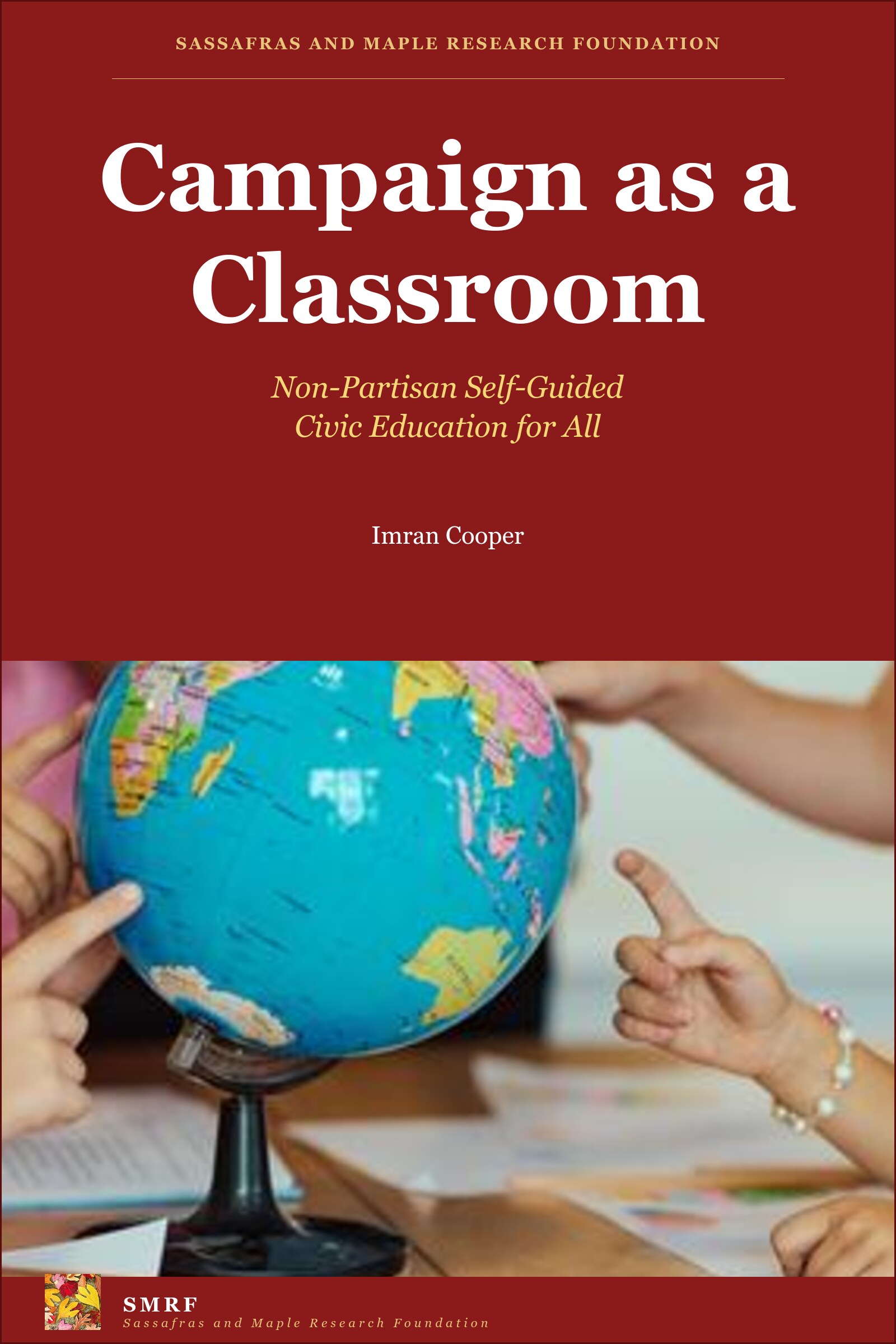
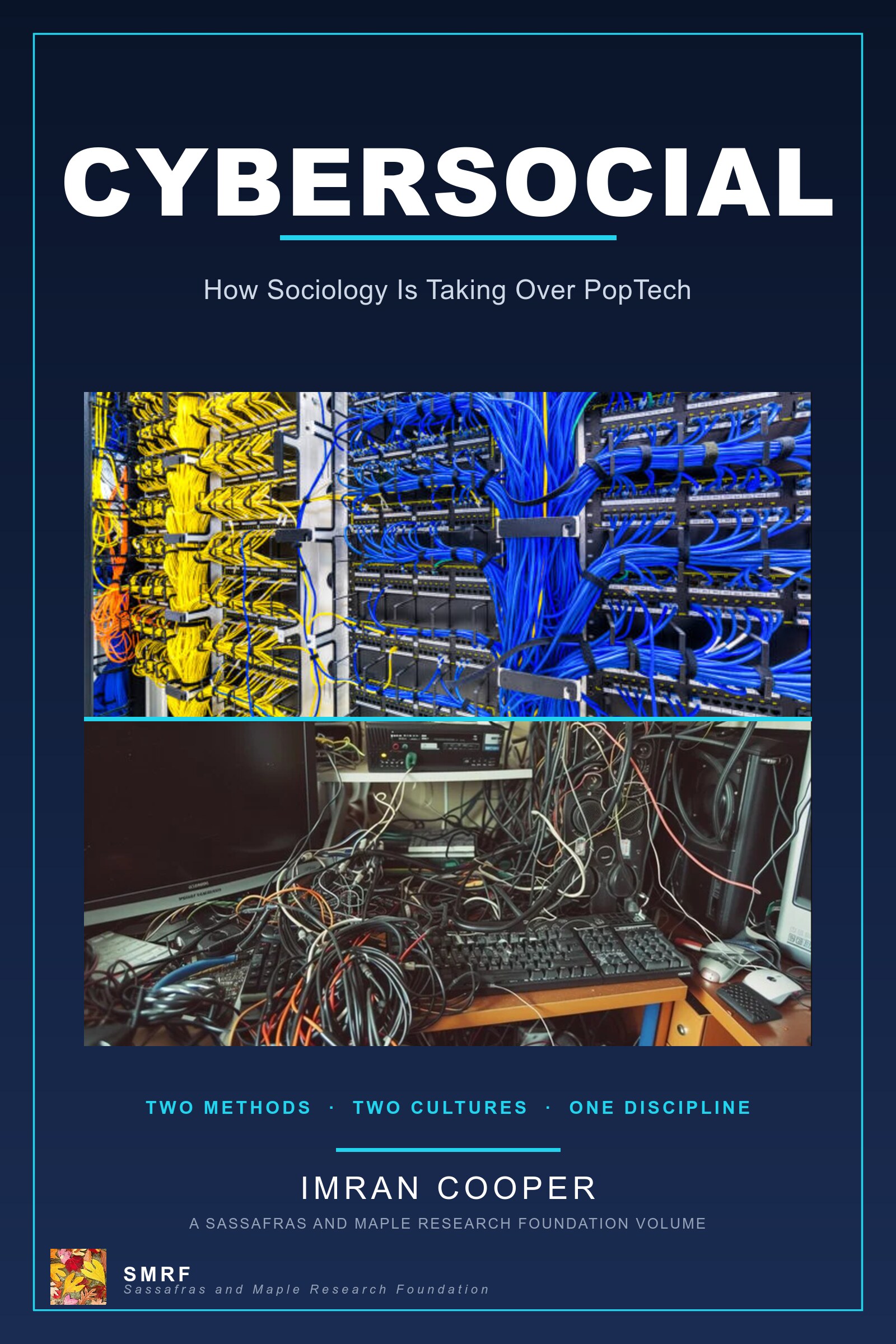
- Research and writing. The published output that anchors and propagates the curriculum. The SMRF book series begins with two volumes: Campaign as a Classroom (the political-science volume) and CyberSocial: How Sociology Is Taking Over PopTech (the sociology-of-technology volume).
The foundation is nonpartisan by design. SMRF curriculum, research, and outreach explicitly stay out of left-right political advocacy. The foundation engages mechanism, not team. The result is a body of civic instruction that any citizen, left, right, center, none, can use to read the system honestly.
Why It Was Built
Imran Stanton Cooper grew up in Kentucky, in a public-school system ranked among the worst in the country, in generational poverty. He watched the institutions that should have taught civic literacy fail to do so, not because the teachers were unwilling, but because the curriculum had been hollowed out. Civic education, where it survived, had been replaced by consumerist political marketing. Voters arrive at ballots having been told whom to support but not how anything works.
By his early twenties, Cooper had run political campaigns. Some of them won. Each one taught him the same lesson: a well-run campaign is the most efficient civic-education program in America. Volunteers walk in not knowing what a precinct captain is. Six weeks later they can name every county clerk in the district, read a campaign-finance report, and explain to their neighbors what the school board does. The campaign teaches because the campaign needs them to know.
SMRF formalized that observation. The foundation registered with the Colorado Department of Higher Education in 2016. The first occupational-school registration of its kind. The premise: build the curriculum the campaigns already use, decouple it from any single political team, and ship it as instruction.
Foundation Facts
The Four Basic Guiding Bodies
The political industry is the only mature American industry with no trade schools, no occupational review boards, no unions, and no third-party accreditors, the four guiding bodies every other certified profession built decades ago. A residential linesman is required to complete 6,000 hours of practical training and certification from an accredited institution before he is allowed to touch a power line. One wrong action and a neighborhood grid goes down. A campaign manager handling a six-figure budget and the procedural literacy of an entire voter base is required to complete zero hours of anything. The mismatch is not accidental. It is the structural condition that produces the political class the public says it cannot trust. SMRF was founded to build the first of the four.
1. Trade Schools
Provide focused, practical training for high-stakes professions, electricians, nurses, mechanics, ensuring a baseline of competence and ethical practice. SMRF is the first nonpartisan political trade school. It trains campaign managers, organizers, candidates, and field staff in the practical, ethical, and strategic skills public service requires. It replaces the current ad-hoc, learn-on-the-fly system with a professional pipeline accessible to anyone outside elite networks.
2. Occupational Review Boards
Oversee credentialing, investigate misconduct, and revoke licenses when necessary. They protect the public from malpractice and ensure ongoing professional development. A political occupational review board would certify campaign professionals, investigate ethical breaches, and enforce consequences for misconduct. Elected officials are constitutionally exempt from licensing requirements, but they can still choose to be certified, or come from a previously certified position.
3. Unions
Protect workers' rights, negotiate fair wages and conditions, and advocate for industry standards. Political unions would organize campaign workers, staffers, and organizers; prevent burnout and turnover; and lobby for reforms that benefit both workers and the public. Since Cooper began publishing this research in 2014, more organizers' unions have begun to appear.
4. Third-Party Accreditors
Evaluate educational programs, ensuring curricula meet industry standards and best practices. Independent accreditation of political training programs guarantees rigor, nonpartisanship, and relevance. It prevents fly-by-night trainings and ensures consistency across the industry. Third-party accreditors are typically required to be non-governmental and independent from political affiliation.
Acceptance Documentation
The foundation's exempt status under Colorado Revised Statutes §12-59-104(1)(j), granted by the Colorado Department of Higher Education, Division of Private Occupational Schools (DPOS), is the legal-status anchor for SMRF as a Colorado-state-registered exempt private occupational school. The full acceptance letter, dated September 7, 2016 and signed by Division Director Lorna Candler under Governor John Hickenlooper, is reproduced in part below.
Download the original acceptance letter (PDF, Colorado DPOS, September 7, 2016) →
Mr. Imran Stanton Cooper
Sassafras and Maple Research Foundation
P.O. Box 9794
Denver, CO 80209
Re: Division of Private Occupational Schools and Request for Exempt Status under section 12-59-104, C.R.S.
Dear Mr. Cooper,
This letter serves as authorization of exemption from the Division of Private Occupational Schools ("Division") concerning Sassafras and Maple Research Foundation, located in Denver, Colorado, and state regulation thereof by the Division as set forth in the provisions of Title 12, Article 59 of the Colorado Revised Statutes.
This is to advise you that the current documentation submitted in support of exempt status reasonably demonstrates that Sassafras and Maple Research Foundation and its course offerings appear to be exempt from state regulation under §§ 12-59-104(1)(j), C.R.S.:
(1) The following educational institutions and educational services are exempt from the provisions of this article: (j) Educational services offered by an employer for the training of its own employees;
It is determination of the Division that Sassafras and Maple Research Foundation is currently not subject to jurisdiction of the Division and Private Occupational Educational Act and is operating in good faith pursuant to the above stated statutory exemptions.
Sincerely,
Lorna Candler, Division Director
Division of Private Occupational Schools
[email protected]
What Came After
Cooper went homeless during the early SMRF years. He rebuilt, took a corporate job that a friend fought to get him into, used the income to buy a twenty-year-old dinner-only restaurant, and lost it during the post-2020 grocery-inflation cycle. The macroeconomic forces that reduced SMRF to a part-time vehicle are the same forces the Historical Apoplexy series later named and diagnosed. The foundation persists. The curriculum persists. The published output is now ramping back up through the SMRF book series and through the cross-foundation work happening at imran.theamanuensis.com.
smrf.theamanuensis.com as its own subdomain, institutional registration, full curriculum library, alumni records, and the operational training infrastructure. The page you are reading is the SMRF profile on the founder's personal site. The two surfaces are coordinated.