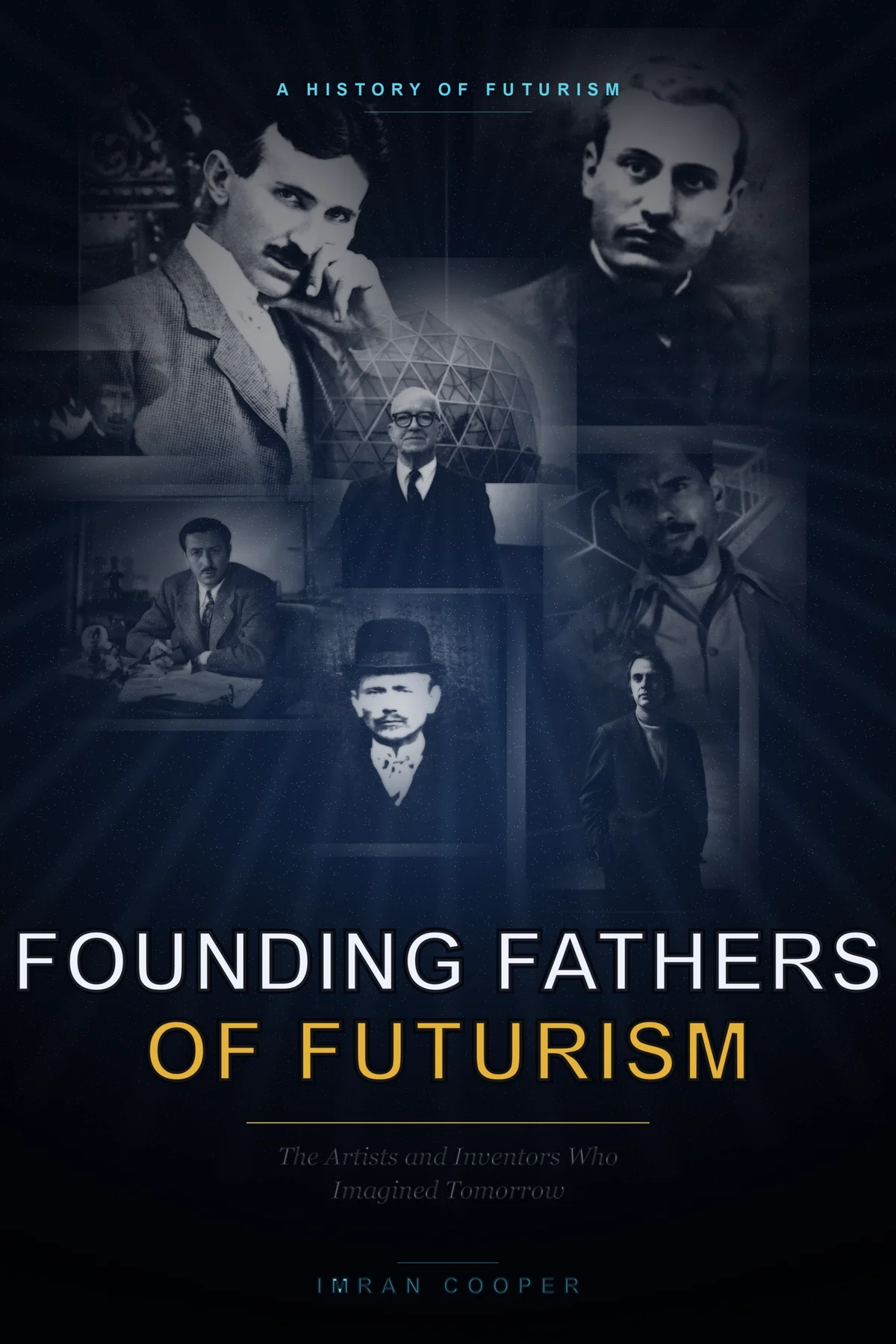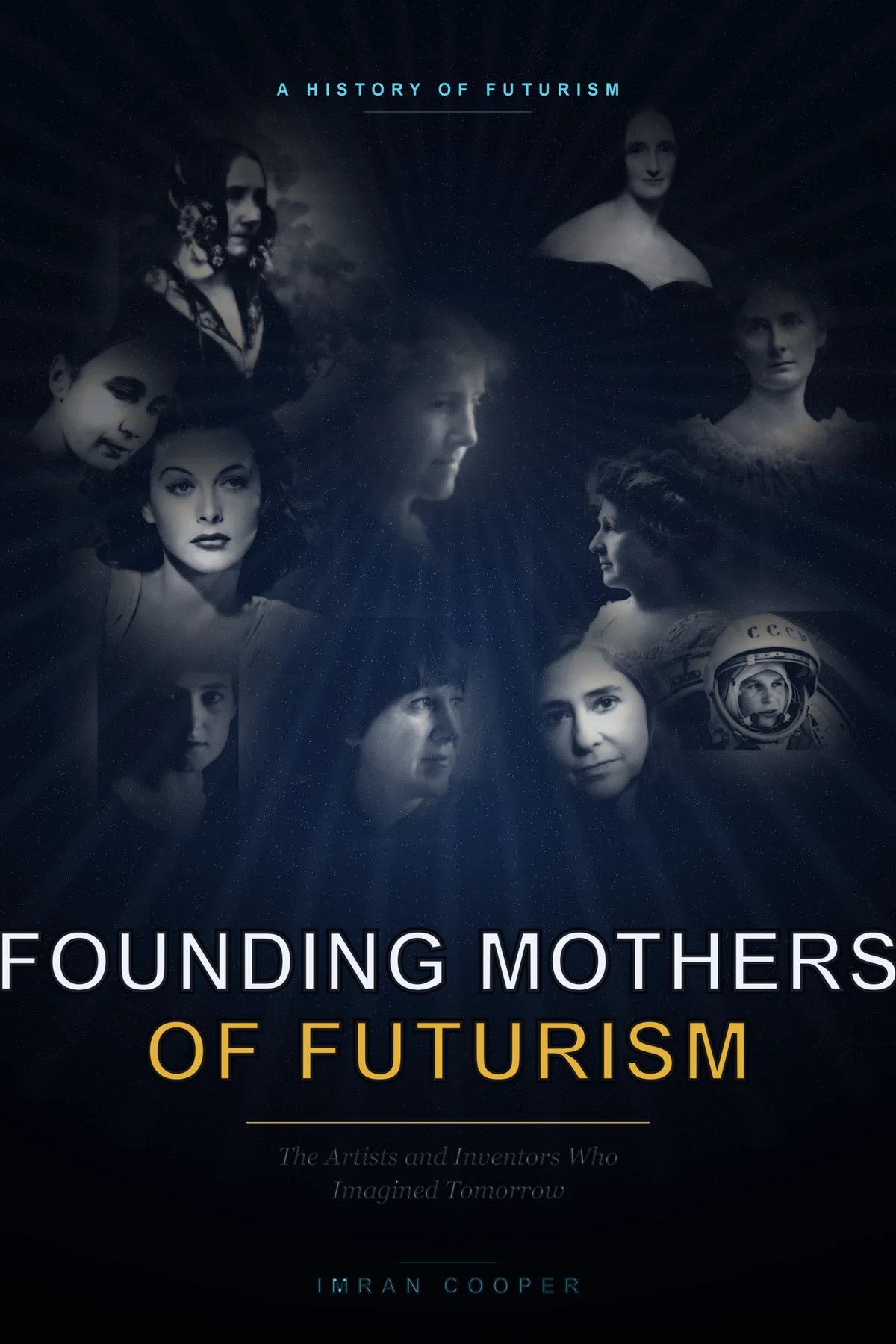
Futurism had founding mothers, and the story forgot most of them. Before, during, and after the men who get the credit, women imagined and engineered the future: the Italian Futurist painters and the woman who wrote the movement's counter-manifesto; Ada Lovelace, who saw what computers could become a century early; Hertha Ayrton and Hedy Lamarr at the workbench; Mary Shelley and Charlotte Perkins Gilman dreaming whole future societies; the astronomers who mapped the cosmos, the cosmonaut who flew into it, and the engineer who wrote the software that got us to the Moon. A companion to Founding Fathers of Futurism, this book recovers them by name.
Founding Mothers of Futurism is the companion to Founding Fathers of Futurism, and it runs the same recovery argument from the Historical Apoplexy works against a sharper case: the systematic forgetting of women who imagined and built the future. Where the Resuscitation Document names apoplectic plagiarism, credit accruing to re-presenters once the originators have been forgotten, the women of futurism are among its clearest casualties. The book opens with the art movement, the Italian Futurist painters and Valentine de Saint-Point, who answered Marinetti's misogynist manifesto with a Manifesto of the Futurist Woman of her own.
The middle of the book crosses to the workbench and the laboratory. Ada Lovelace saw, a century early, that Babbage's engine could do more than arithmetic. Hertha Ayrton engineered the electric arc; Hedy Lamarr co-invented the frequency-hopping system beneath modern wireless. Marie Curie, Annie Jump Cannon, and the women who mapped the heavens did the science the future was built on, while Charlotte Perkins Gilman and Mary Shelley imagined whole societies and technologies before the vocabulary existed to receive them.
The final movement follows the dream into the twentieth century and beyond: Margaret Hamilton, who coined software engineering and wrote the code that landed Apollo; Valentina Tereshkova, the first woman in space; and Donella Meadows, whose systems thinking carried the abundance argument forward. Across all three, the pattern from Historical Apoplexy holds, the future is imagined, then forgotten, then sold back as new, except here the forgetting runs along a second axis. Founding Mothers of Futurism is at once a portrait gallery and an act of remembering.
- The Glass Universe, Dava Sobel
- Hidden Figures, Margot Lee Shetterly
- Broad Band: The Untold Story of the Women Who Made the Internet, Claire L. Evans
- Ada's Algorithm, James Essinger
- The Futurist Moment, Marjorie Perloff
History-of-science and history-of-technology readers, women-in-STEM and women's-history audiences, futurism and Space-Age enthusiasts, readers of the Historical Apoplexy works following the recovery argument, and anyone who wants the other half of the story of who imagined the future.
Also in Historical Apoplexy View series →