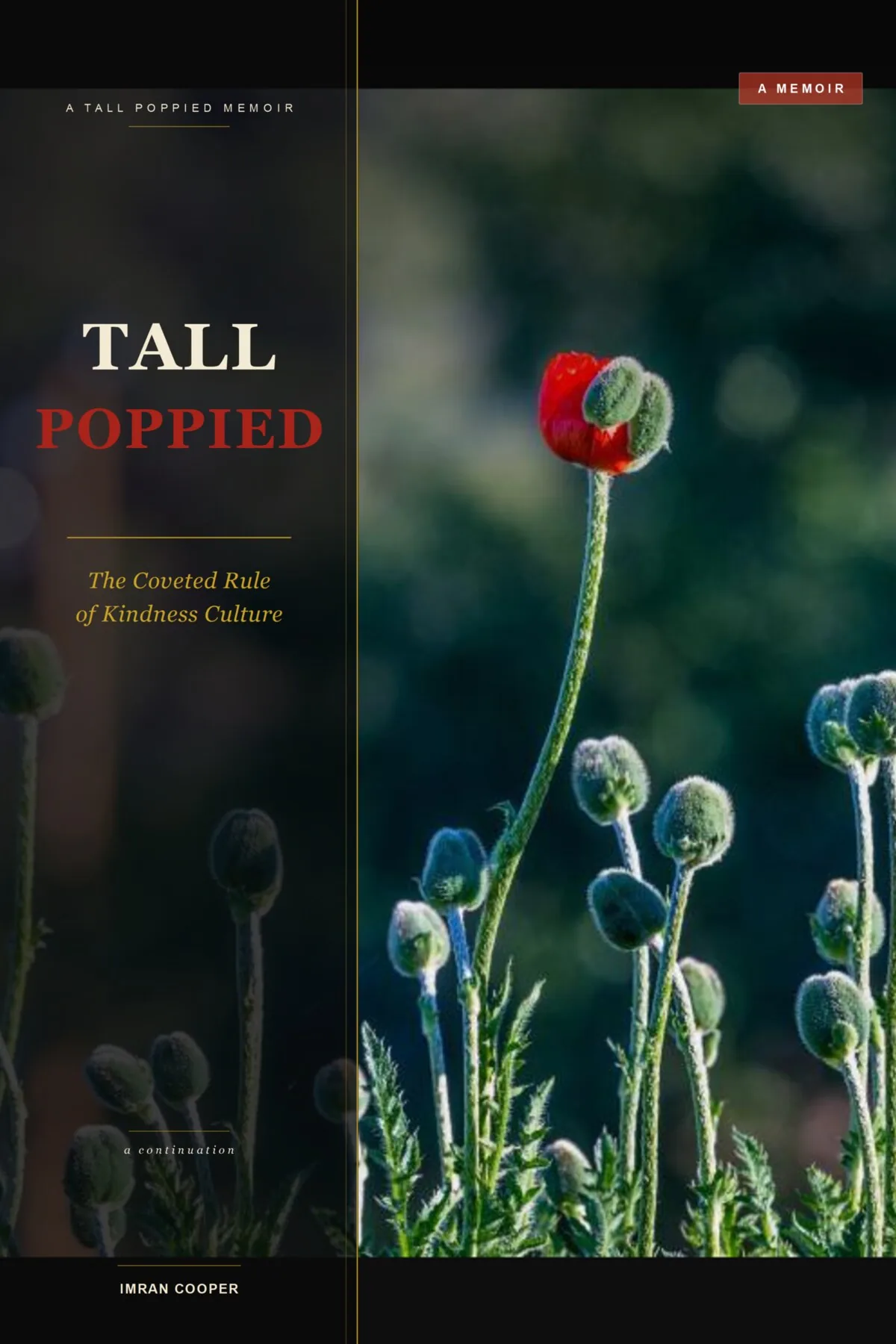
From rural Kentucky to the oldest private military college, from political field campaigns that unseated incumbents to bankruptcy and back, from Norwich to SMRF to a Jacksonville restaurant to The Amanuensis. The whole arc, finally on the page, written by someone who never figured out how to put it down.
Imran Stanton Cooper grew up in one of the poorest states in the country and spent most of his life trying to answer a simple question: why is abundance so expensive when the math says it doesn't have to be? The Full Arc tells what answering that question cost him.
The book moves through the canonical American working-class material, a gun to his head, the day he walked away from a Norwich University military contract, but tracks something most American memoirs miss: the long pull of going forward when nothing in the institutional architecture wants you to. Solar permitting across one-hundred-sixty jurisdictions. Political campaigns where the incumbent had every advantage and lost anyway. A food startup. Owned a successful restaurant. A research foundation registered with the State of Colorado. A technology company built without venture capital.
The voice is plain and unsparing. Cooper is not a stoic and does not pretend to be one. The book's title comes from a remark someone made to him in his thirties: that he did not have what the Buddhists call a resting life. He didn't argue. He kept working.
- Long Walk to Freedom, Nelson Mandela
- Hillbilly Elegy, J.D. Vance
- Educated, Tara Westover
- Shoe Dog, Phil Knight
- The Autobiography of Benjamin Franklin
Trade memoir readers, working-class American autobiography audience, readers of complicated arcs.
Also in Memoirs View series →