After abject poverty has destroyed you, the next gate is composure. Kindness culture asks survivors to be perfect through every cut and gash that follows. This is what that gate looks like from inside, and why the people best-suited to leadership are the ones it filters out.
The first Tall Poppied book documented what cross-class friendships do to the poor person who shows competence. This one documents what comes next: the social filter that kicks in once you have survived the first gate. Kindness culture, the contemporary professional standard of agreeable affect, composed bearing, and emotional regulation as workplace etiquette, is the second filter. Cooper makes the case that it functions as gatekeeping for the people who needed neither composure nor kindness because nothing in their lives had tested them.
The book pulls on combat veteran literature, on Erving Goffman's dramaturgy of social performance, on the literature of post-traumatic growth, and on Cooper's own life, running political campaigns where every loss was personal, walking away from a Norwich University contract, navigating the corporate environments where kindness culture is the explicit standard. The argument is not that kindness is bad. The argument is that requiring composure from the people who have already paid in blood is a way of paying them again.
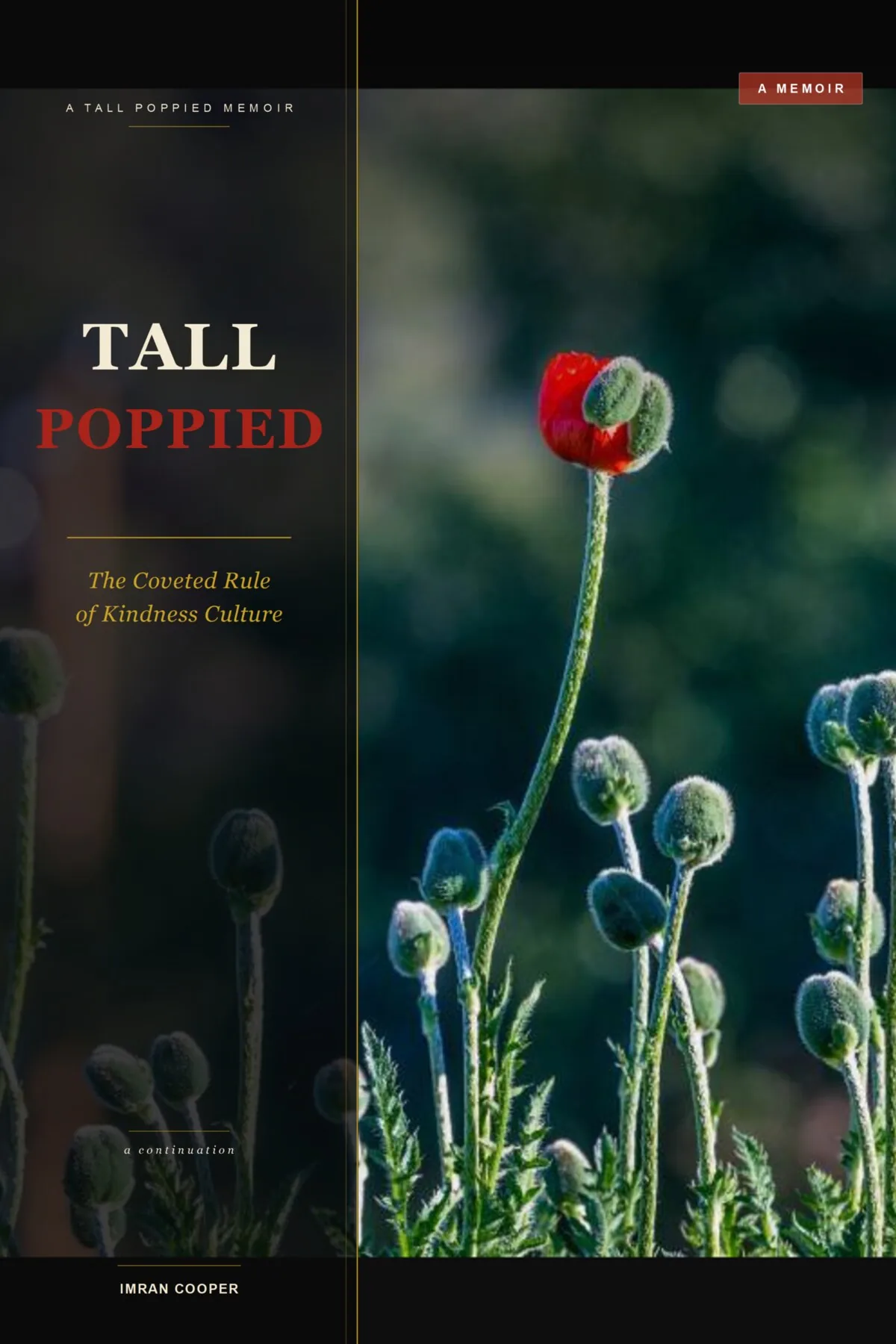
Reads as the second movement of a paired memoir. Same poppy photo, smaller bloom, the visual is the argument the book makes about what happens after the rise.
- Tribe, Sebastian Junger
- The Body Keeps the Score, Bessel van der Kolk
- The Presentation of Self in Everyday Life, Erving Goffman
- Quiet, Susan Cain
- The Spirit Level, Wilkinson and Pickett
Literary-memoir readers, workplace-culture critics, veterans, organizational-development readers.
Also in Memoirs View series →