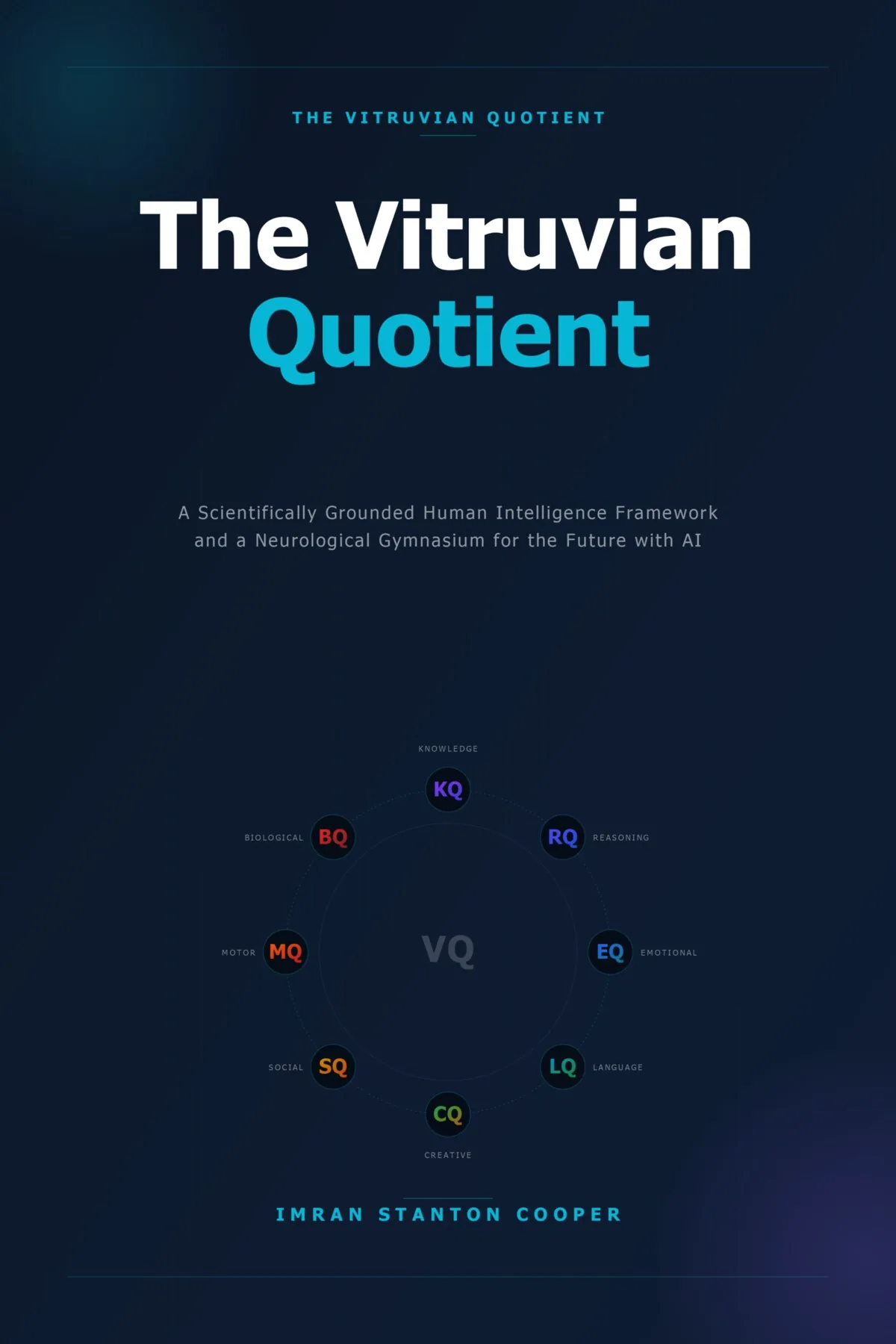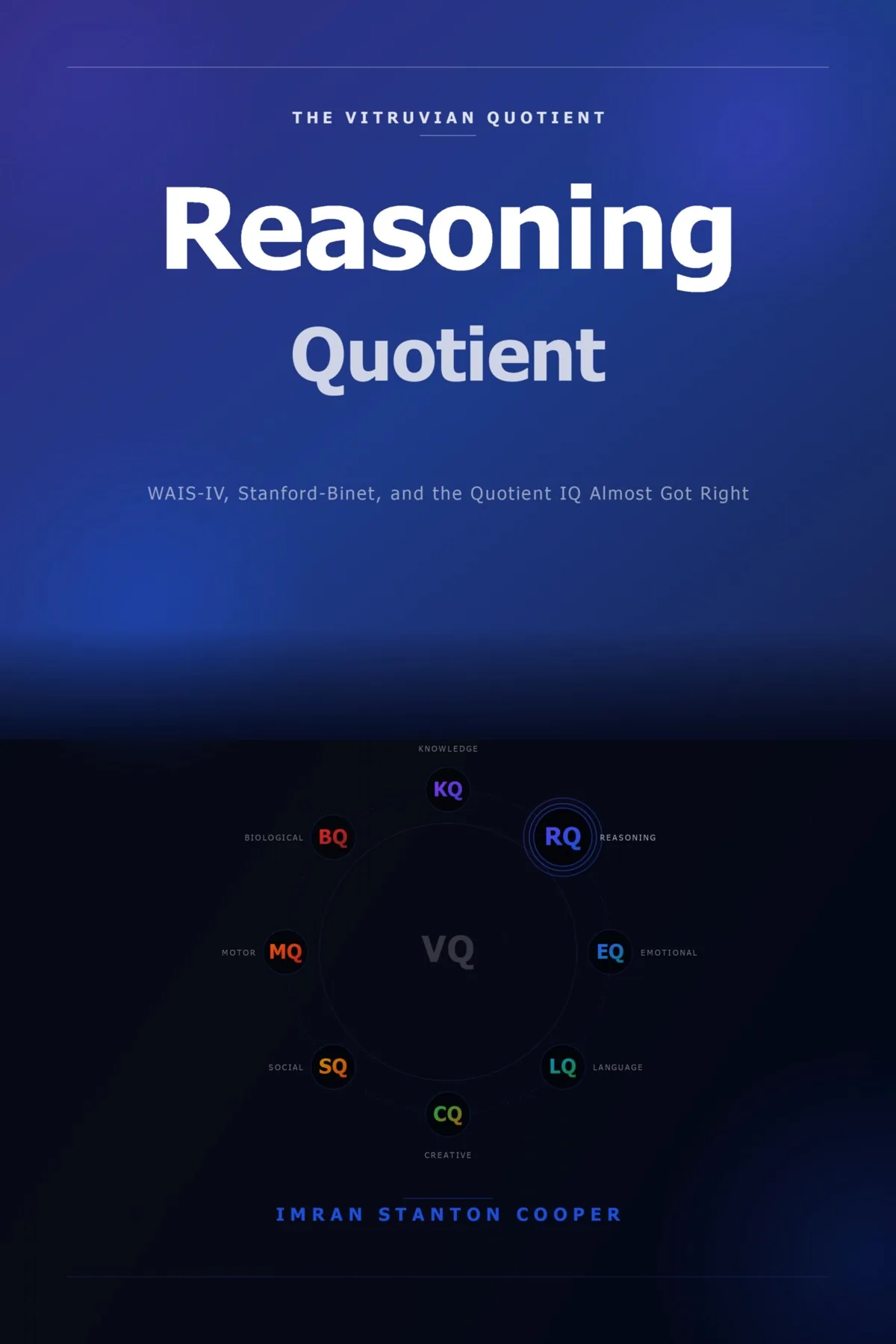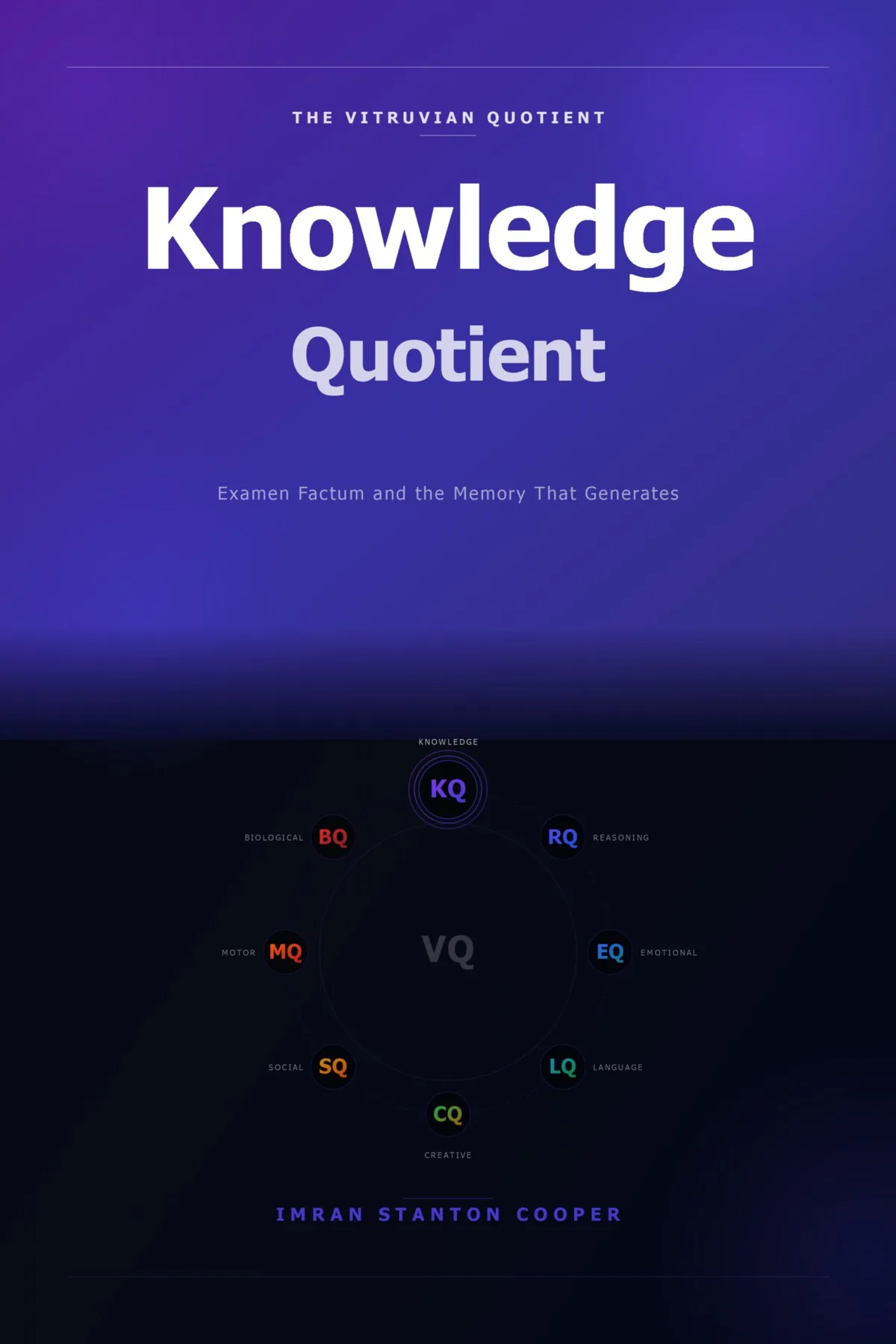
Recognizing a fact from a list isn't the same as generating it from a prompt. KQ separates retrieval from understanding, and the new instrument that does it, Examen Factum, finally lets us measure the difference.
Knowledge is the slipperiest of the eight quotients to measure. SAT and ACT are calibrated, but they ask recognition. The Wechsler scales sample but compress. PIAAC's 2023 finding, twenty-eight percent of U.S. adults at the lowest literacy level, up from nineteen percent in 2017, is the canary in the room.
Cooper's Knowledge Quotient volume introduces Examen Factum, the framework's reverse-flashcard instrument: the assessor presents a prompt, the examinee generates the knowledge. Recognition becomes generation. The book pulls on Spearman, Bloom's taxonomy, Hirsch's cultural-literacy work, Polanyi's tacit knowledge, Brenda Milner's H.M. case studies, and Bjork's desirable-difficulties research to map why this distinction matters and how the instrument captures it.
Short volume, focused, fast, citation-dense. The first of eight per-quotient companions to the main VQ-Trade book.
- Cultural Literacy, E.D. Hirsch
- Make It Stick, Brown / Roediger / McDaniel
- Why Don't Students Like School?, Daniel Willingham
- Range, David Epstein
Educators, cognitive-science readers, assessment-design practitioners.
Also in The Vitruvian Quotient View series →