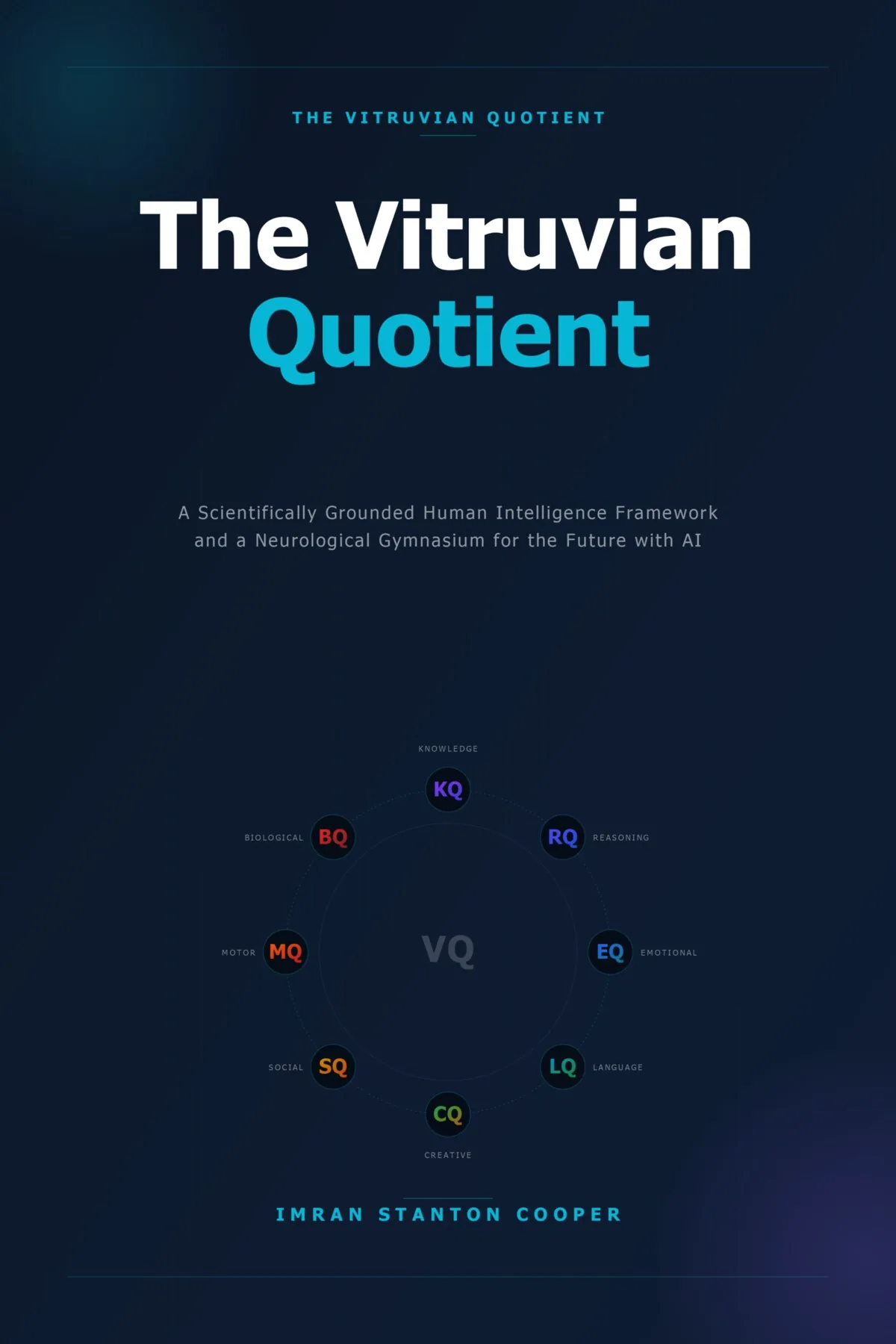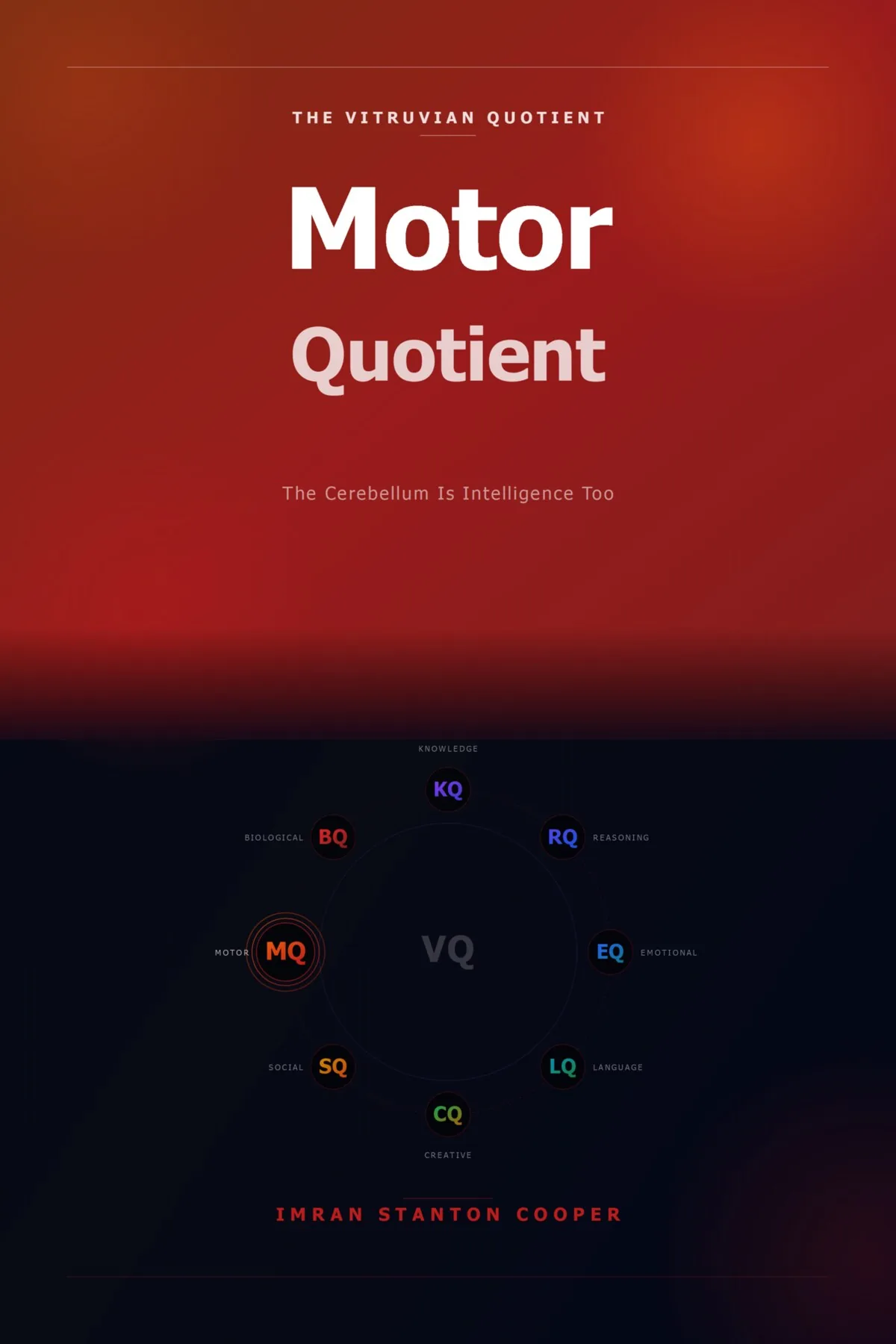
fMRI of surgeons during knot-tying shows motor and prefrontal regions co-activating. Skilled motion is cognition. The Motor Quotient treats the body as the brain it actually is.
When surgeons tie knots, fMRI shows motor cortex and prefrontal regions co-activating. Skilled motion is not separate from cognition. It is a form of it. The Motor Quotient is built on this finding and on the free, open framework that operationalizes it: CAPL-2 and its CAMSA motor-skill course (the Canadian Assessment of Physical Literacy, CC-BY 4.0), with the PACER and plank protocols, open Healthy Fitness Zone literature, sport-specific assessments, and tool-manipulation probes.
Cooper's MQ chapter introduces the weighted dual-model: Base physical fitness counts for fifty percent, sports counts for thirty percent, tool manipulation counts for twenty percent. The model resists the typical trap (motor-strong students gaming the test on athletics alone) by requiring the tool-manipulation component, and it accommodates disability (the wheelchair-user case is the worked example, where the contextual modifier shifts MQ to upper-body and tool-manipulation, treating the disability as clinically negligible toward overall intelligence).
Short volume. Companion to the main VQ-Trade book.
- Spark, John Ratey
- The Brain That Changes Itself, Norman Doidge
- Talent Is Overrated, Geoff Colvin
- Bounce, Matthew Syed
Athletes, coaches, kinesiology readers, neuroscience-curious trade audience.
Also in The Vitruvian Quotient View series →